Ryujin: the dragon kami of the sea in Japanese mythology
Meet Ryujin, the dragon kami of the sea linked to Watatsumi, Ryugu-jo, tide jewels, fishing, rain, and Japanese stories about ocean power.
Who is Ryujin?
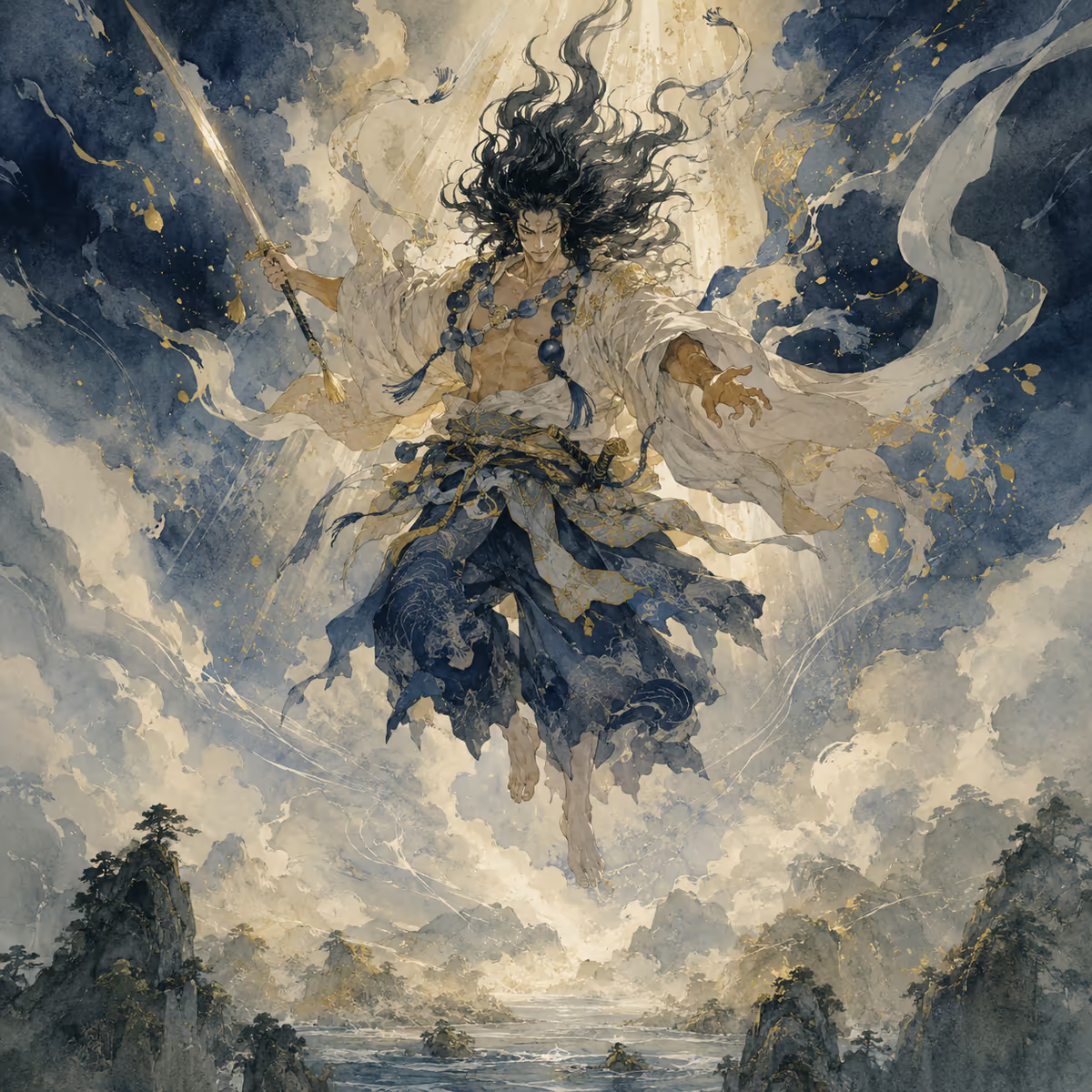
Ryujin is the dragon kami of the sea, a presence joining aquatic divinity, command of tides, and oceanic imagination. Calling him a dragon god works, but his reach is wider: rain, fishing, storms, depths, and palaces beneath the water.
Ryugu-jo and the tide jewels
Many stories place his realm in Ryugu-jo, the underwater palace where human time bends. The tide jewels, shiohirutama and shiomitsutama, show Ryujin as lord of natural rhythms no human fully controls.
What Ryujin represents
Ryujin gives form to Japan’s respect for the sea: source of food, route of travel, unpredictable danger, and sacred world. He reminds us that the ocean is not a backdrop; it is a living authority that lends wealth and demands reverence.
The sea as palace and border
Ryujin belongs to an imagination in which the sea is not empty: it is kingdom, path, treasure, and danger. Ryugu-jo, the undersea palace, turns the deep into a marvelous court with its own time and rules humans rarely understand.
This vision appears in sea-linked tales such as Urashima Taro, but it is broader. It expresses a Japanese relationship with waters that feed, protect, separate, and may also take back what they grant.
Tide jewels and authority over water
The tide jewels associated with sea divinities reveal an old theme: to command water is to command passage, fishing, war, fertility, and survival. Ryujin gathers that authority in the form of a dragon-kami.
That is why he should not be read as a generic dragon. His force lies in the sovereignty of waters and in the meeting between the human world and the undersea world, where a gift may save, but may also create debt.
Japanese terms index
Ryujin
A dragon kami linked to the sea, tides, rain, and the deep power of water.
Watatsumi
An old name for a sea deity or spiritual sea force, sometimes associated with Ryujin.
Ryugu-jo
The underwater palace of the Dragon King, present in tales such as Urashima Taro.
Shiohirutama
A jewel that makes the tide recede, symbolizing ritual control over waters.
Shiomitsutama
A jewel that makes the tide rise, paired with Shiohirutama in mythic narratives.
Toyotamabime
A sea princess connected to mythic lineages and the underwater world.
You might also like
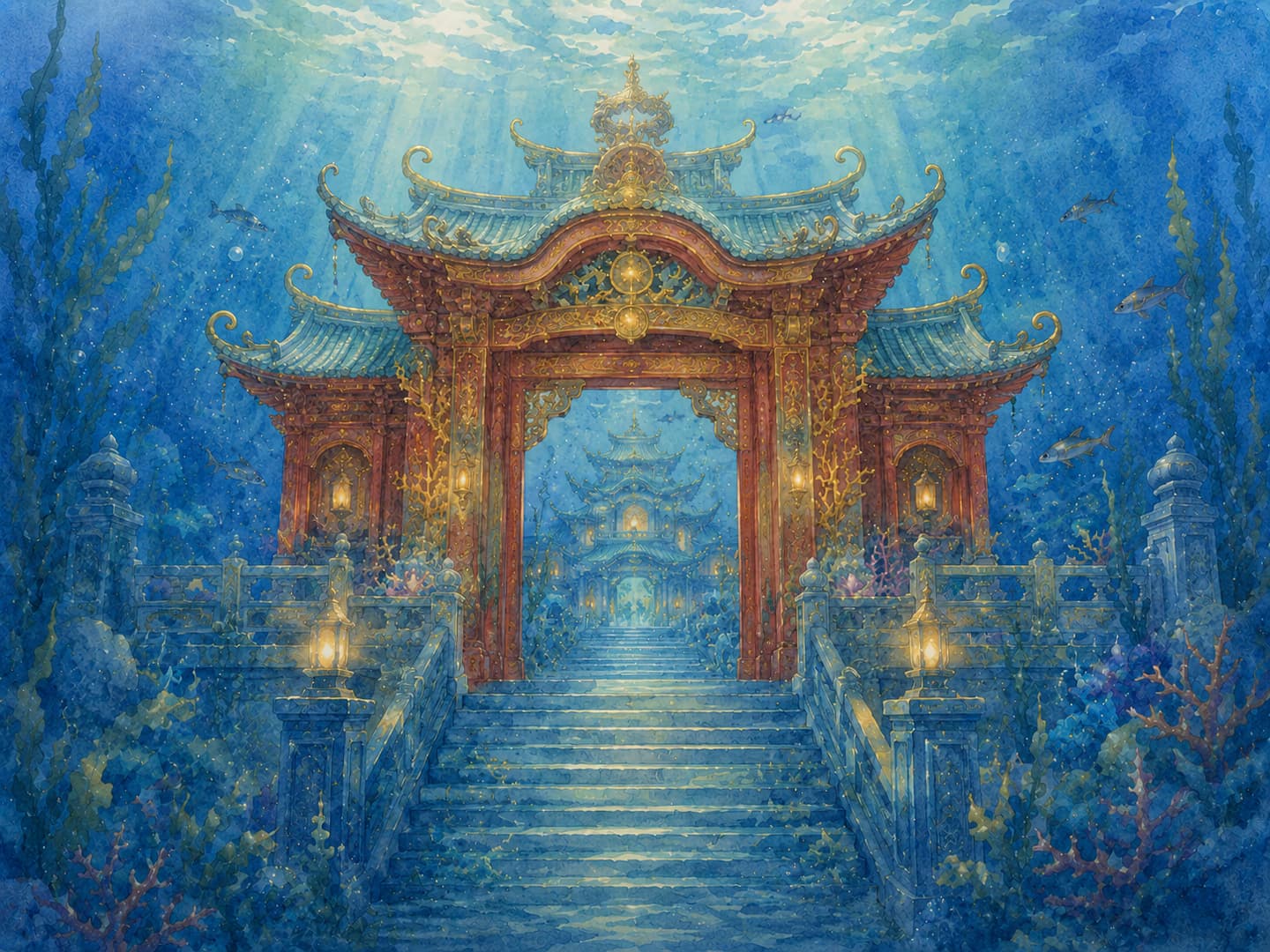
The Dragon Palace is not only an undersea wonder: it is the border where beauty, hospitality, and another measure of time meet...
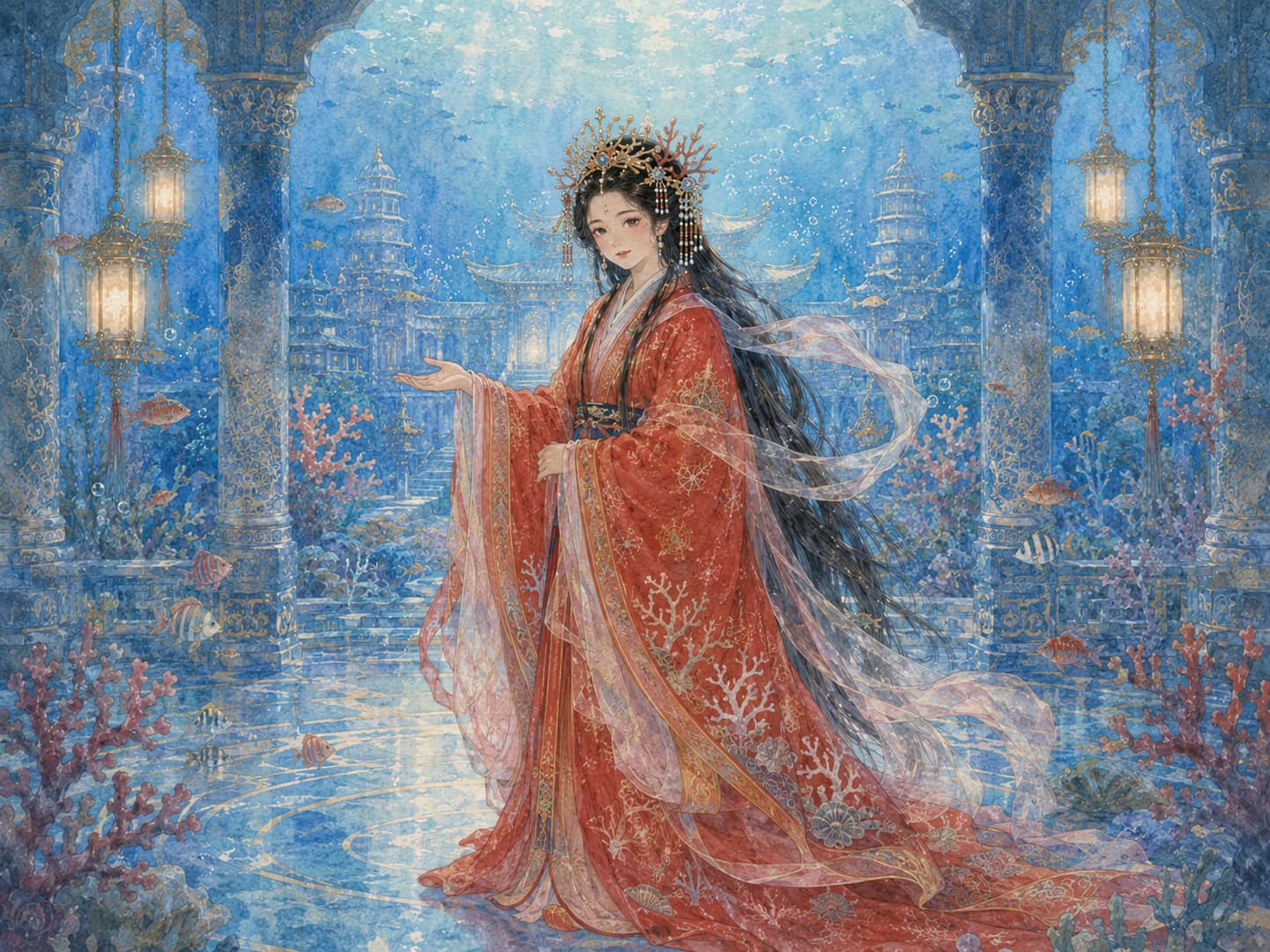
The sea princess gives Ryugu-jo a human face: graceful, mysterious, generous, and bound to rules the visitor cannot fully unde...
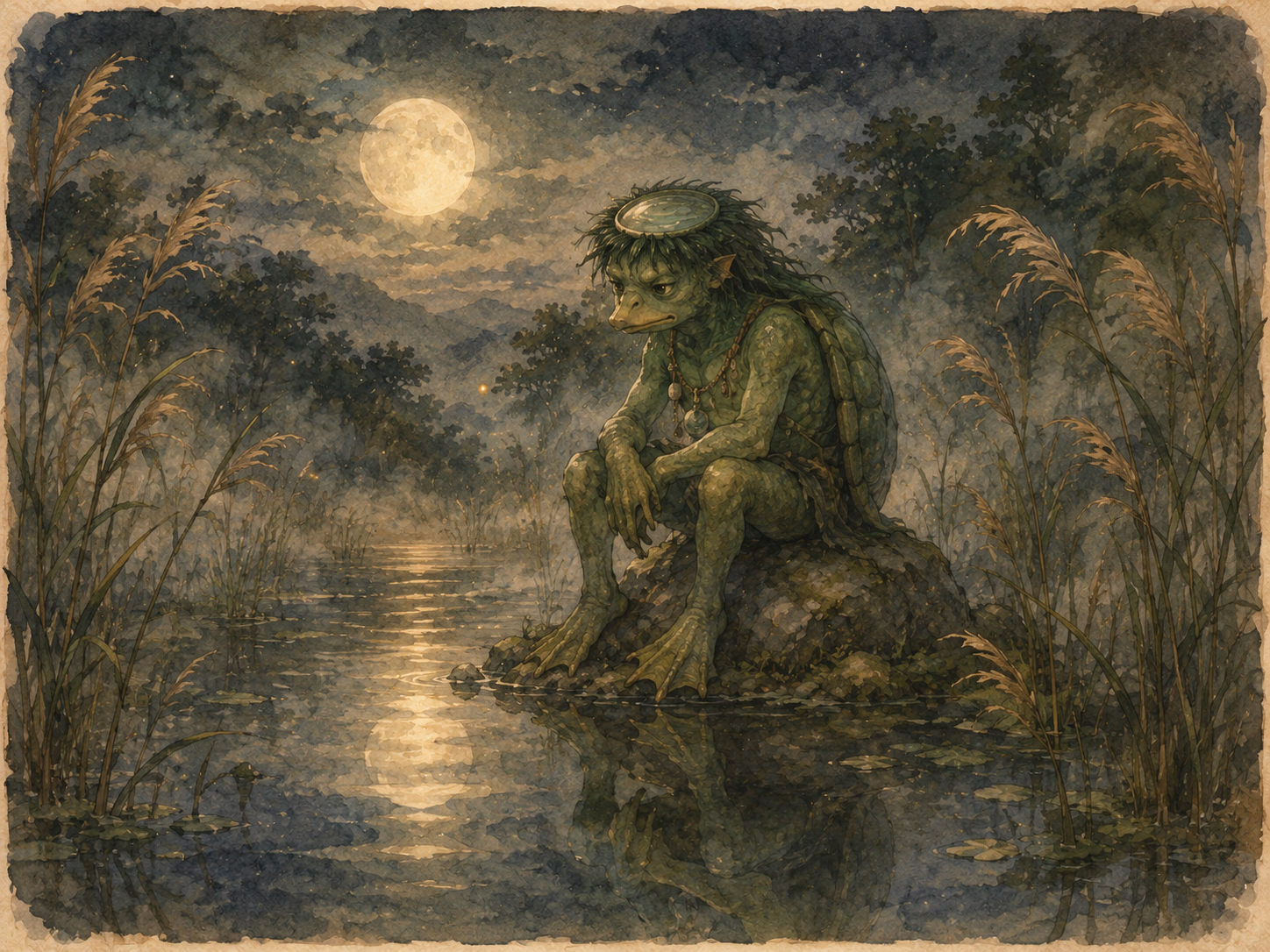
The river being that combines humor, danger, etiquette, sacred water, and childhood fear.
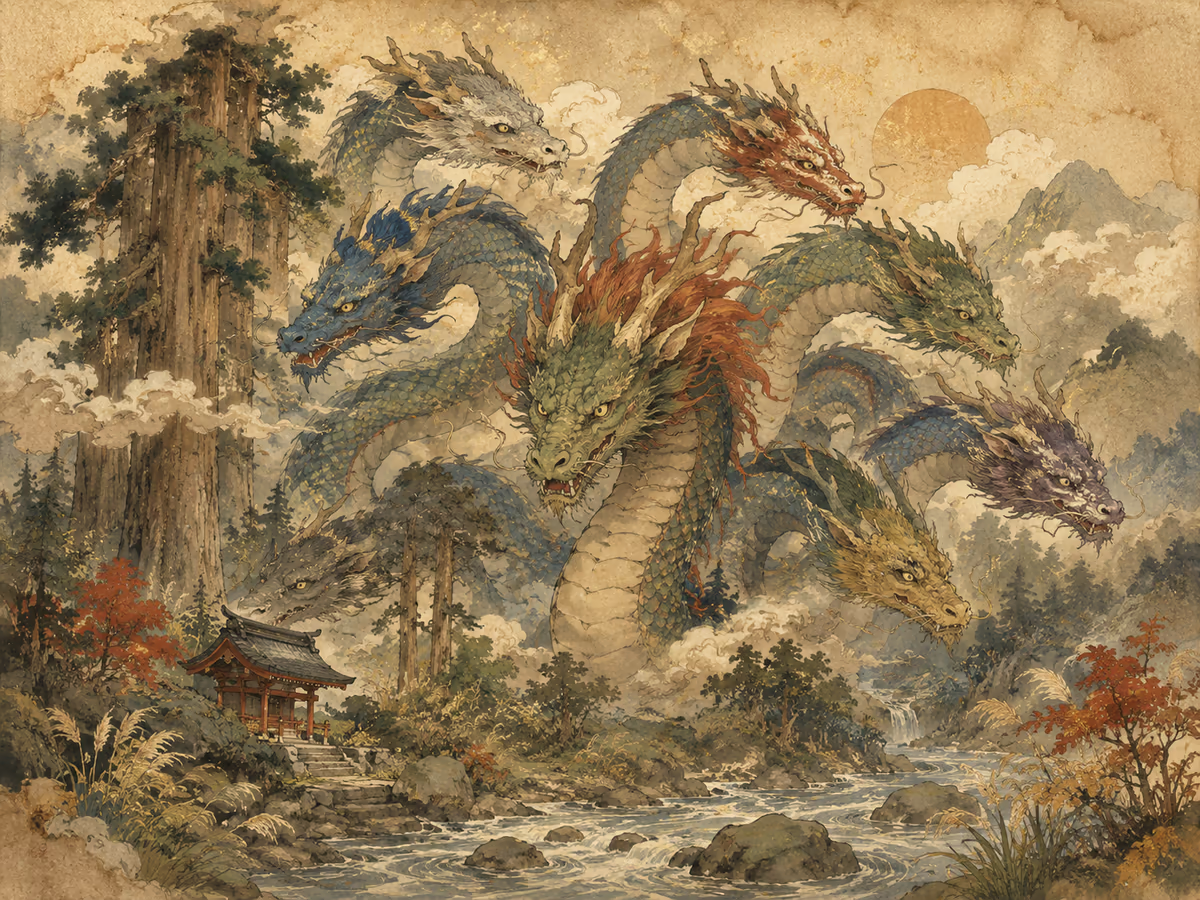
The eight-headed force that turns terror, river, sacrifice, and sovereignty into myth.
The impetuous kami who breaks heavenly order and defeats Yamata no Orochi.
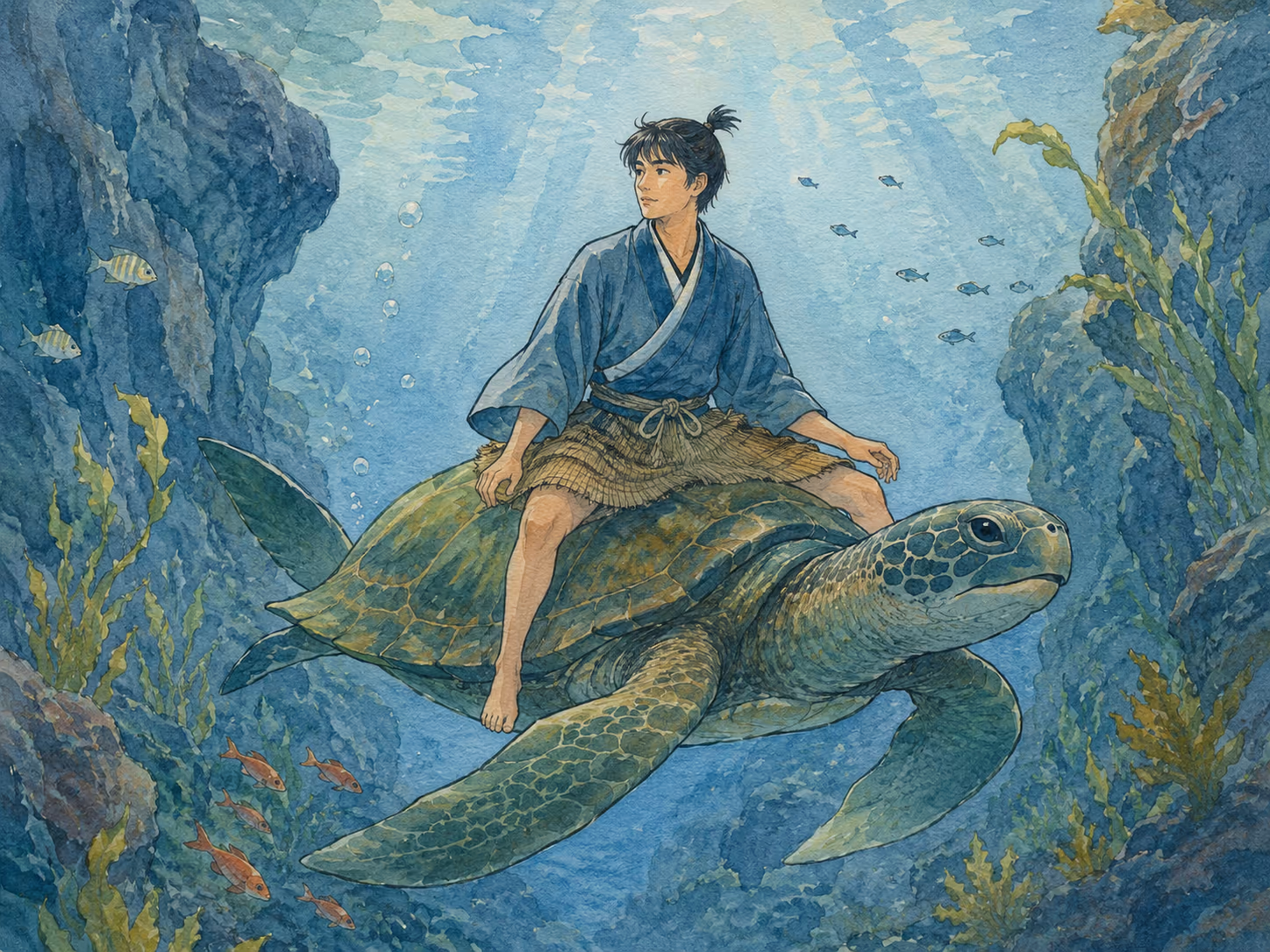
Read Urashima Taro, the Japanese legend of a fisherman who saves a turtle, visits Ryugu-jo, and returns with the mysterious ta...