Yamata no Orochi: Japan’s eight-headed serpent
Understand Yamata no Orochi, the eight-headed serpent defeated by Susanoo in the Izumo cycle, linked to ritual sake, Kushinadahime, and the origin of the sword Kusanagi.
Who is Yamata no Orochi?
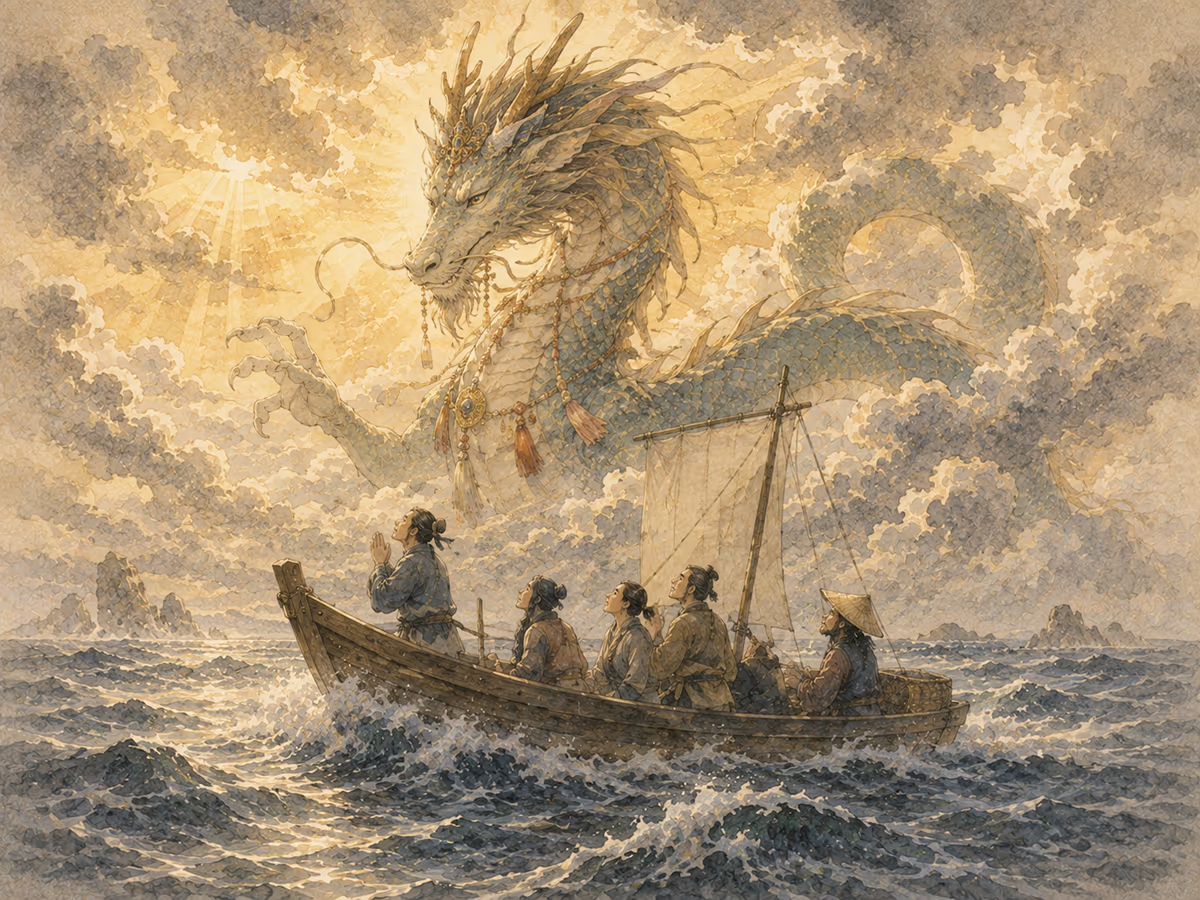
Yamata no Orochi should not be reduced to a generic monster. It belongs to the core of Japanese myth: an immense serpent with eight heads and eight tails that devours daughters of one family until Susanoo reaches Izumo.
Susanoo, sake, and strategy
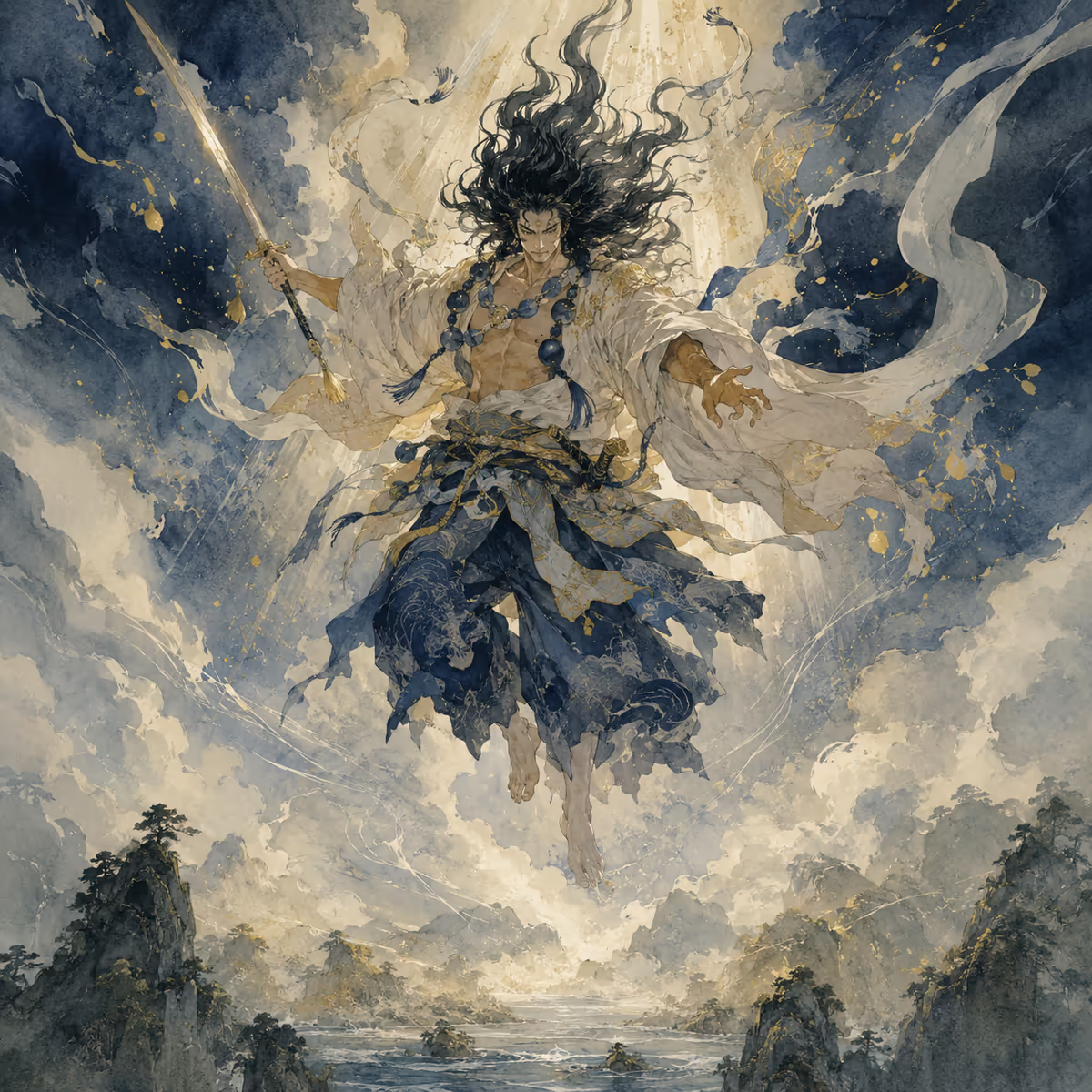
Susanoo’s victory is not brute force alone. He prepares yashiori no sake, intoxicates the serpent, and then defeats it. In the tail he finds Kusanagi no Tsurugi, tying the monster’s death to authority and ritual continuity.
What Orochi represents
Orochi may evoke floods, violent rivers, mountains, and metals hidden underground. The story turns natural disaster into political and ritual myth: chaos must be recognized, intoxicated, divided, and folded into a new order.
A body the size of landscape
Yamata no Orochi is not merely a large serpent. The myth describes a body that seems to contain valleys, rivers, trees, and mountains. That scale turns the monster into a living landscape, as if the danger were too large to face as an ordinary enemy.
Reading Orochi as a natural force helps the story make sense. It gathers flood, threatened fertility, sacrifice, and fear of territory. Susanoo does not defeat only a creature: he reorganizes a space ruled by excess.
Sake, strategy, and treasure
The sake detail is central. Victory does not come through direct combat, but through ritual preparation and practical intelligence. Susanoo understands that a gigantic force can be defeated when its rhythm is changed.
After Orochi dies, the sword Kusanagi appears in the serpent’s tail. The myth suggests that conquered danger can reveal legitimate power, while also reminding us that important treasures sometimes come from dark places.
Japanese terms index
Yamata no Orochi
A giant serpent with eight heads and eight tails, defeated by Susanoo in Izumo narratives.
Susanoo-no-Mikoto
The storm kami who defeats Orochi after being expelled from the heavenly realm.
Kushinadahime
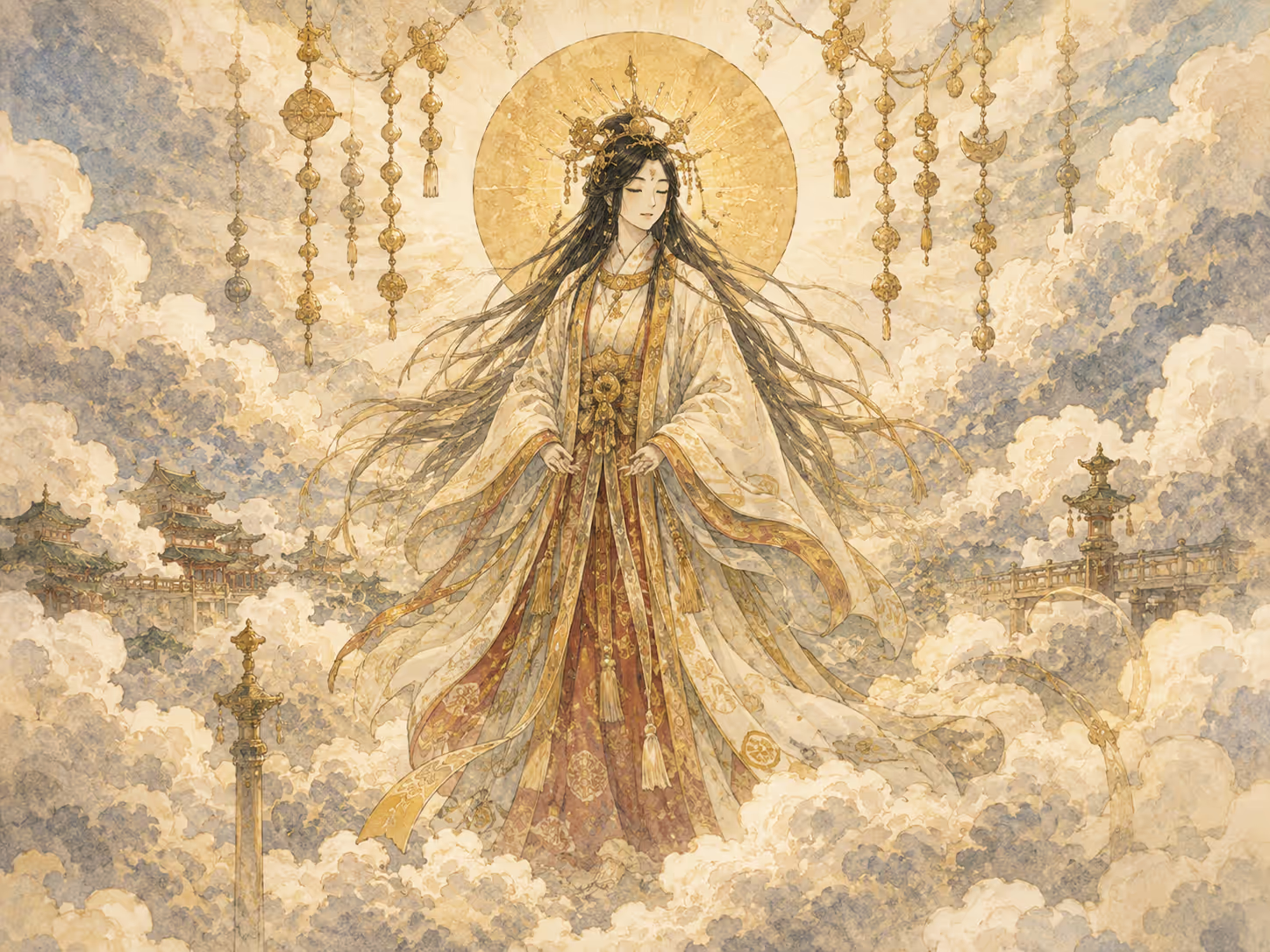
The maiden threatened by Orochi, saved by Susanoo, and tied to a new order.
Yashiori no sake
Strong sake prepared to intoxicate the serpent before Susanoo strikes.
Kusanagi no Tsurugi
The sword found in Orochi’s tail, later associated with Japan’s Sacred Treasures.
Izumo
The Japanese region central to the mythic cycle of Susanoo and Orochi.