Susanoo: the storm kami in Japanese mythology
Meet Susanoo, the storm kami of Japanese mythology: his rivalry with Amaterasu, exile in Izumo, Yamata no Orochi, and the Kusanagi sword.
Who is Susanoo?
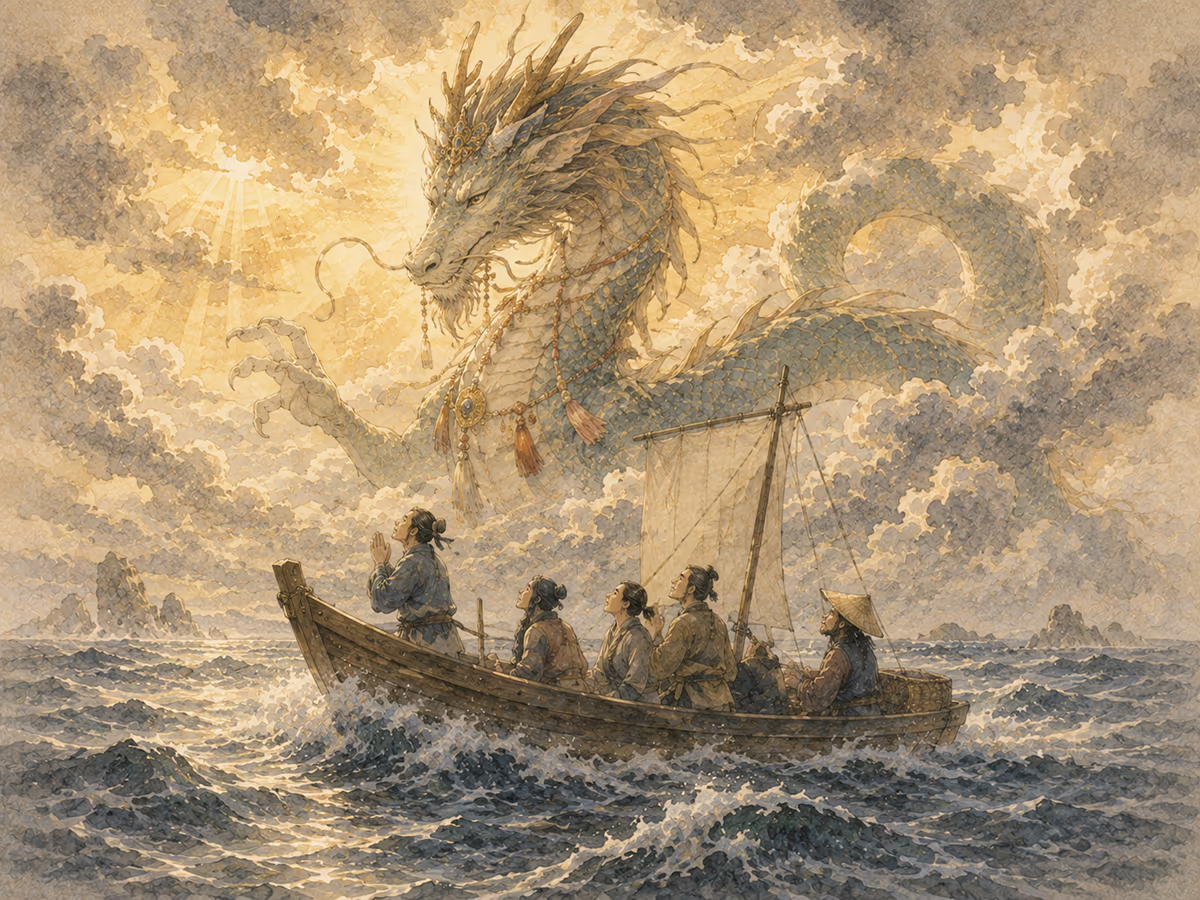
Susanoo-no-Mikoto is one of the major kami of Japanese mythology. He is linked to wind, sea, storms, and a force that is hard to contain.
Like Amaterasu, Susanoo is born after Izanagi’s purification; in the best-known versions, he emerges from the creator god’s nose. That origin places him within the same divine family, but his function is different: he represents motion, instability, and rupture.
Susanoo and Amaterasu
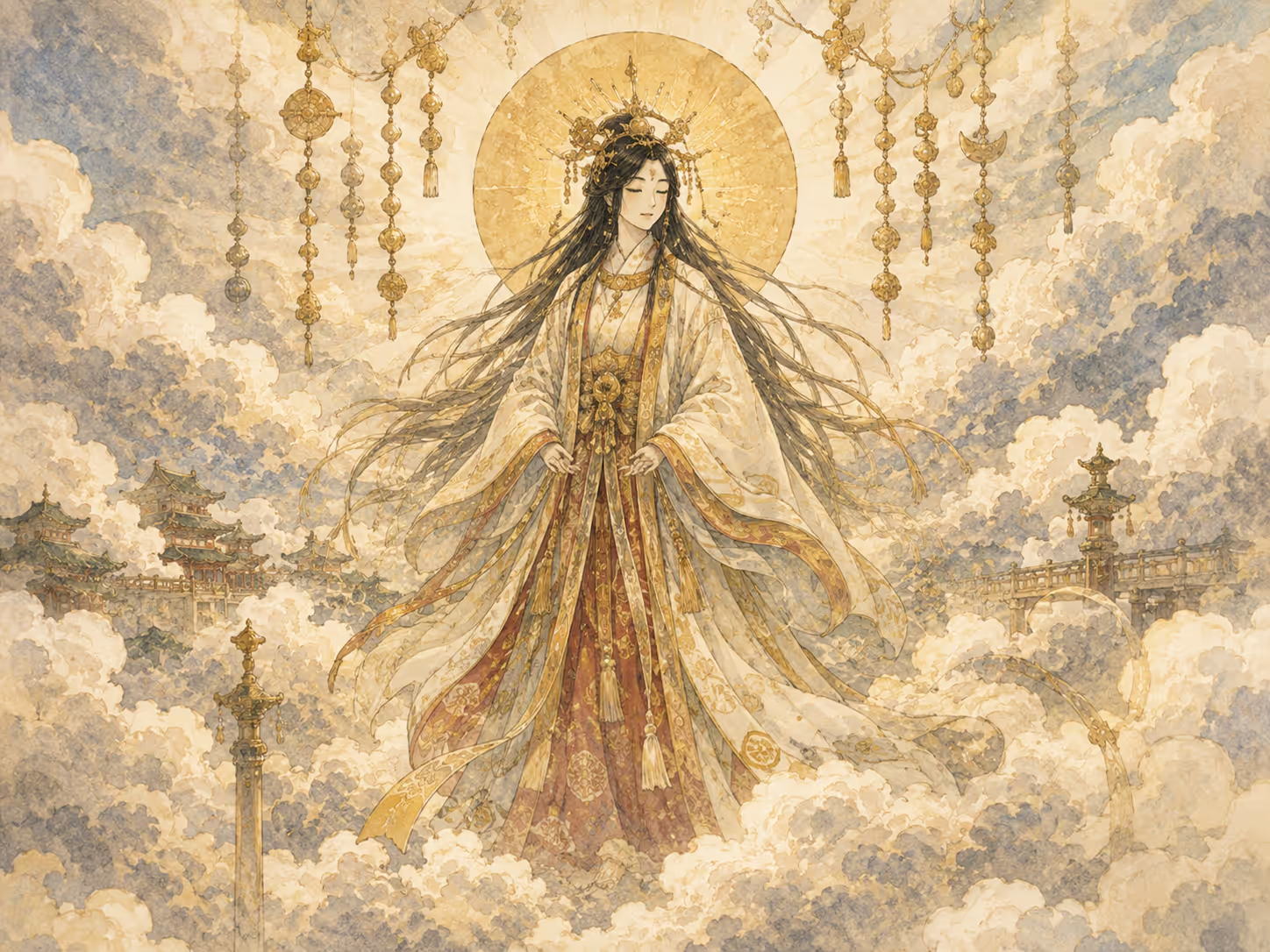
In the ancient myths, Susanoo clashes with Amaterasu in Takamanohara. His violence reaches sacred spaces and leads the solar kami to withdraw into the heavenly cave.
This episode shows Susanoo as excessive force. He is not only a villain: he is the storm that exposes the fragility of order and forces the divine world to respond. His fall begins when that energy stops serving shared life.
Izumo and Yamata no Orochi
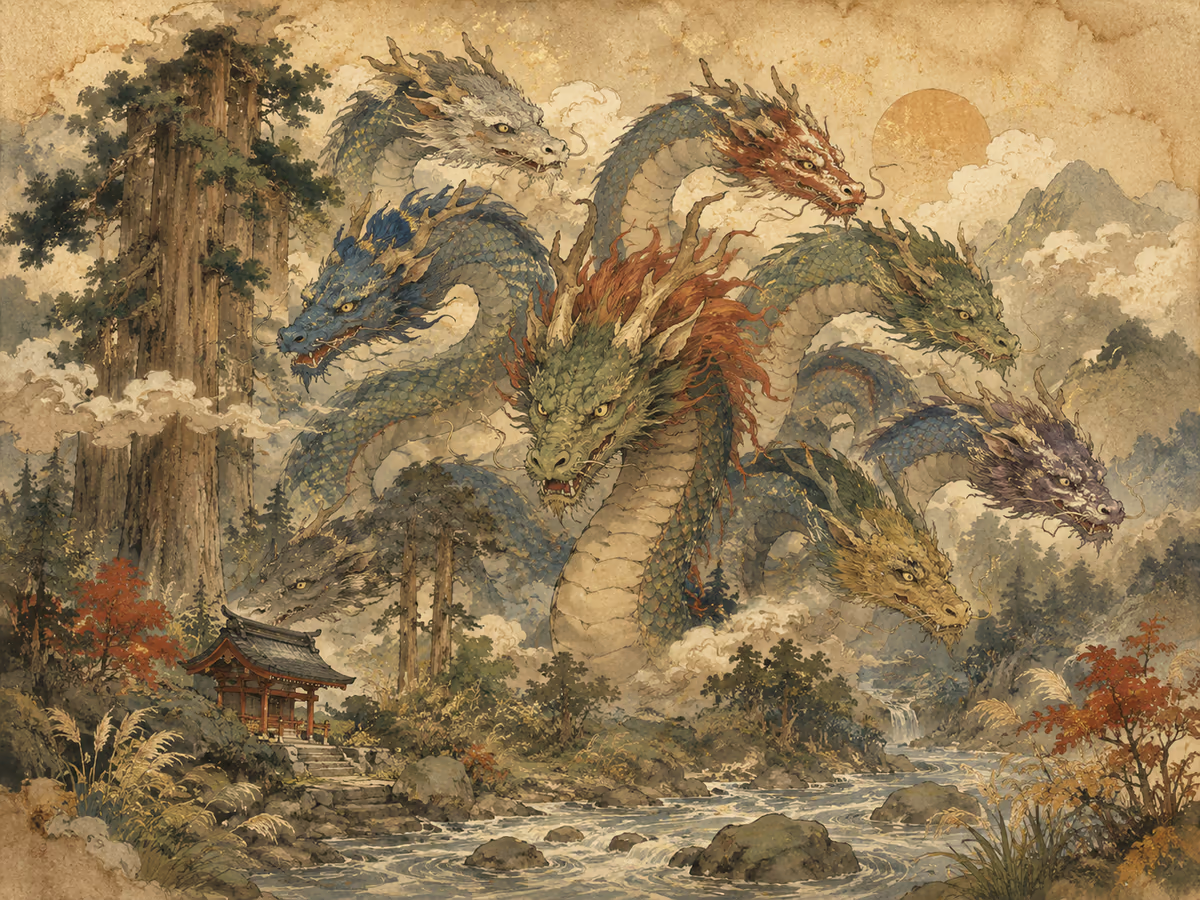
After his exile, Susanoo descends to Izumo. There, his energy changes direction. Instead of devastating, he acts with strategy against Yamata no Orochi, the serpent of eight heads and eight tails.
With drink prepared in large vats, Susanoo weakens the creature, saves Kushinadahime, and discovers a precious sword in its tail. The myth turns raw violence into protective action and makes exile a path toward maturity.
What Susanoo represents
Susanoo represents force crossing boundaries. He reminds us that not every crisis is only destruction: some storms reveal what must be repaired.
The sword Kusanagi, linked to the treasure found in Yamata no Orochi, strengthens that symbolic turn. Something dangerous is faced, cut open, and transformed into inheritance. That is why Susanoo carries disorder and reconstruction, impulse and responsibility, fury and the possibility of change.
From fury to maturity
Susanoo is powerful because he does not fit one clean moral. He begins as excess: tears, violence, rupture, exile. Yet his story does not end in chaos. When he descends to Izumo, untamed energy finds direction and begins to protect a threatened family.
That movement makes Susanoo richer than a simple storm god. He embodies transformation: the same force that disrupts heaven can later defeat Yamata no Orochi and found a new order on earth.
Japanese terms index
Susanoo-no-Mikoto
The name of the kami associated with storms, sea, impetuous force, exile, and mythic transformation.
Takamanohara
The heavenly plain of Japanese myth, where Susanoo comes into conflict with Amaterasu.
Izumo
A region tied to many Susanoo myths, especially after his descent from heaven.
Yamata no Orochi
The monstrous eight-branched serpent defeated by Susanoo in the Izumo myth.
Kusanagi no Tsurugi
The sword connected to the treasure found in Yamata no Orochi’s tail and later associated with imperial regalia.