Amaterasu: the sun kami in Japanese mythology
Meet Amaterasu, Japan’s solar kami: the heavenly cave myth, the sacred mirror Yata no Kagami, and her ties to Ise, rice, ritual, and imperial tradition.
Who is Amaterasu?
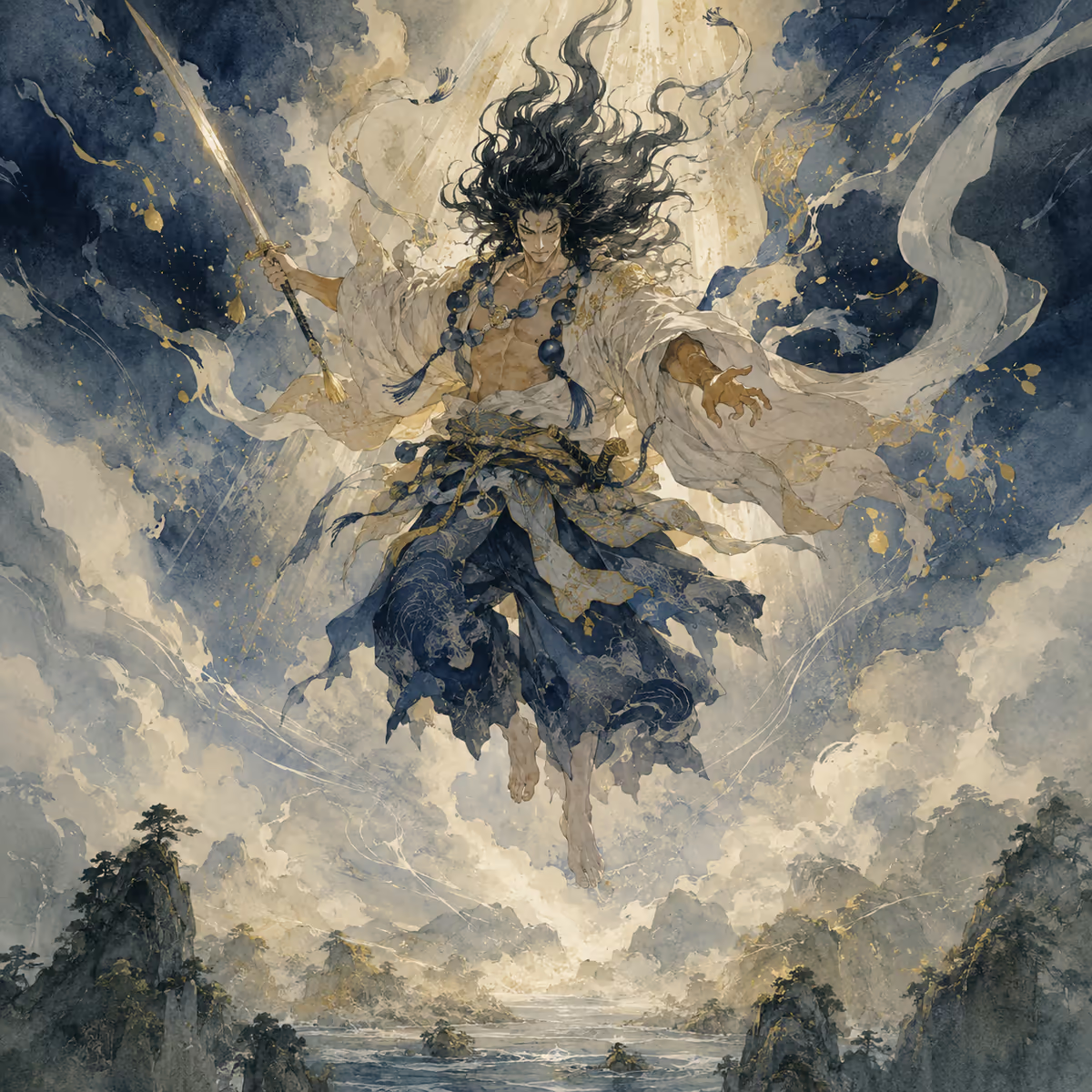
Amaterasu Omikami is the kami of the sun, light, and heavenly order. She is often called a “sun goddess”, but kami is broader: a sacred presence that can inhabit nature, lineage, places, and rites.
In the Kojiki, Amaterasu is born when Izanagi purifies his left eye after returning from the underworld. She appears among the “three noble children”, alongside Tsukuyomi and Susanoo, and receives rule over Takamanohara, the Plain of High Heaven.
The heavenly cave
Her best-known myth is Ame-no-Iwayato. After a violent rupture caused by Susanoo, Amaterasu withdraws into the heavenly cave. Without her light, the world loses rhythm, clarity, and safety.
The other kami do not solve the crisis by force. They create a ritual scene of music, laughter, dance, Ame-no-Uzume’s provocative performance, and a mirror. When Amaterasu approaches the reflected light, brightness returns. The myth suggests that order also depends on collective intelligence.
The mirror, Ise, and ritual presence
Yata no Kagami, the mirror associated with Amaterasu, is more than a treasure. It represents presence, reflection, and recognition: to see the light is also to remember the duty of keeping it in the world.
Tradition links the mirror to the Sacred Treasures and to Amaterasu’s protective presence. At Ise Jingu, she is venerated as a central kami; the periodic rebuilding of the shrine expresses a powerful idea: tradition is not stillness. It endures because it is remade with care.
What Amaterasu represents
Amaterasu speaks of a light that organizes life. Her withdrawal shows how violence can break the symbolic world; her return shows that repair requires community, ritual, imagination, and a shared form of joy.
That is why she remains meaningful beyond mythology. Amaterasu represents the force that allows people to see, plant, govern, celebrate, and begin again without breaking the thread between past, harvest, and future.
Light, rice, and ritual continuity
Amaterasu is not confined to one famous myth. Her meaning extends into harvest, calendar, ritual purity, and communal continuity. When the sun returns, brightness is not the only thing restored: so are planting, timing, celebration, and a shared sense of order.
This is why the connection with Ise Jingu matters. The shrine presents Amaterasu not as a distant character, but as a presence renewed through repeated acts of care. Its periodic rebuilding expresses a precise idea: tradition survives because it is practiced again.
How to read Amaterasu today
Calling Amaterasu simply a sun goddess flattens the symbol. She is also a story about withdrawal and return, crisis and repair, wound and public restoration. The world darkens when the relationship among the kami breaks; light returns when the community creates a rite able to call presence back.
That reading also clarifies the mirror. It is not only a sacred object. It is an image of recognition: light must be seen, reflected, and accepted by those who live beneath it.
Japanese terms index
Amaterasu Omikami
The reverential name of Amaterasu, the great kami who illuminates heaven and stands at the center of Shinto tradition.
Kami
A Japanese term for sacred beings, natural forces, revered ancestors, and spiritual presences.
Ame-no-Iwayato
The heavenly cave where Amaterasu hides, plunging the world into darkness.
Yata no Kagami
The sacred mirror linked to the return of light and to one of Japan’s Three Sacred Treasures.
Ise Jingu
The great shrine associated with Amaterasu’s worship and Japan’s ritual continuity.