Otohime: the sea princess in Urashima Taro
Meet Otohime, princess of Ryugu-jo, and explore her origin, symbolism, and role in Japanese sea folklore.
Who is Otohime?
Otohime is the princess of Ryugu-jo, the Dragon Palace beneath the sea, and one of the most memorable figures in Japanese sea folklore. She represents the undersea court: beauty, music, ceremony, abundance, and a kind of hospitality that seems to belong to another world.
In the familiar version of the tale, she receives the human visitor inside the palace and shapes the experience of Ryugu-jo. The journey becomes more than a reward for kindness: it gains the atmosphere of a dream, the etiquette of a court, and the danger of a supernatural realm.
Otohime works as a threshold figure. She opens the doors of the sea kingdom, but she also reminds us that this kingdom does not follow the rules of the human village. Her enchantment is never merely decorative; it marks the distance between daily life and the sacred world of the sea.
The meaning of the name Otohime
Otohime is written 乙姫. The character 姫 means princess. 乙 can suggest a secondary or younger position within a lineage, and in traditional names it also carries an elegant, old-fashioned nuance.
That is why Otohime is best understood as a princess of the undersea palace, not simply as a beautiful woman from the sea. The name places her inside a noble order: she belongs to a court, a ritualized space, and an authority connected with the ocean.
This matters for the tale. Otohime is not only a romantic figure. She is a princess of the border: someone who welcomes the visitor, governs the hospitality of the other world, and knows that the beauty of Ryugu-jo has rules of its own.
Origin and variants of the character
The figure now called Otohime does not appear in the same form in every older Urashima tradition. Classical versions may involve a mysterious woman, a distant island, or a turtle that becomes a female figure.
Over time, especially in illustrated and medieval narrative forms, the elements familiar today become clearer: Ryugu-jo, the princess of the palace, the turtle messenger, and the farewell box. Otohime emerges from this gradual shaping of the tale.
That evolution makes the character richer. She is not an ornament added to beautify the story; she gives a human face to the sea kingdom. Through her, the palace gains voice, gesture, and emotion.
Otohime and the court of Ryugu-jo
Ryugu-jo is more than a beautiful setting. It works as an undersea court, with music, feasts, sea creatures, and an architecture imagined as precious, luminous, and far removed from ordinary life. Otohime is the figure who organizes that space for the visitor.
In many representations, the palace mixes aristocratic luxury with aquatic imagination: fish as attendants, shining halls, floating fabrics, columns, lanterns, and the feeling that the sea itself has become a noble residence.
In this context, Otohime personifies the palace. She does not merely live in Ryugu-jo; she translates its logic. Her welcome, farewell, and limits show that the undersea realm is beautiful, but not human.
A sea princess, not just a love interest
It is easy to read Otohime as an enchanting princess or possible romantic figure, but that is only part of her role. Her stronger function is to mediate contact between a human being and a realm outside ordinary time.
She offers welcome, but does not become part of the human world. She offers beauty, but does not erase the distance between worlds. She offers a farewell, but does not make return simple.
That tension keeps Otohime from becoming just a romantic princess. She is closer to a courtly guardian of the other world: generous, ceremonial, unforgettable, and dangerous precisely because what she represents cannot be possessed.
Otohime and the tamatebako
The tamatebako matters to Otohime because it is her final gesture, but it does not need to dominate every reading of her character. The box works as an emblem of farewell: a small object carrying the etiquette, secrecy, and boundary of the undersea palace.
More than a punishment, the box shows that Otohime knows rules the visitor cannot fully understand. She does not explain everything; she gives a condition. That silence makes the scene stranger and more powerful.
So the tamatebako reveals one specific side of Otohime: she is kind, but not transparent. The princess belongs to a world where gifts can also be pacts, and where beauty is never completely separate from mystery.
The meaning of Otohime in the tale
Otohime gives human form to the fascination of the sea. The ocean, which could be only distance and danger, appears through her as court, invitation, beauty, and promise. She makes the other world desirable.
At the same time, she preserves that world’s otherness. The palace can receive a visitor, but it remains the kingdom of the sea. Otohime can show tenderness, but she is still bound to an order the human world does not control.
That is why she enriches the legend so deeply: Otohime is enchantment and boundary at once. Without her, Ryugu-jo would be only a wondrous place. With her, it becomes a living, memorable, and emotionally ambiguous presence.
Index of Japanese terms
Otohime
The princess of the undersea palace in Urashima Taro. She welcomes the fisherman to Ryugu-jo and gives him the tamatebako when he leaves.
Ryugu-jo
The Dragon Palace, an undersea realm associated with the sea, abundance, and a flow of time unlike the human world.
Ryujin
The dragon god of the sea in Japanese tradition. Ryugu-jo is often understood as his palace, even though the Urashima tale places Otohime at the emotional center.
Tamatebako
The mysterious box Otohime gives to Urashima Taro. It looks like a gift, but it carries the consequence of time spent outside the human world.
Kame
Turtle. In the tale, the turtle is the messenger linking the shore to the undersea palace and leading Urashima into Otohime’s realm.
You might also like
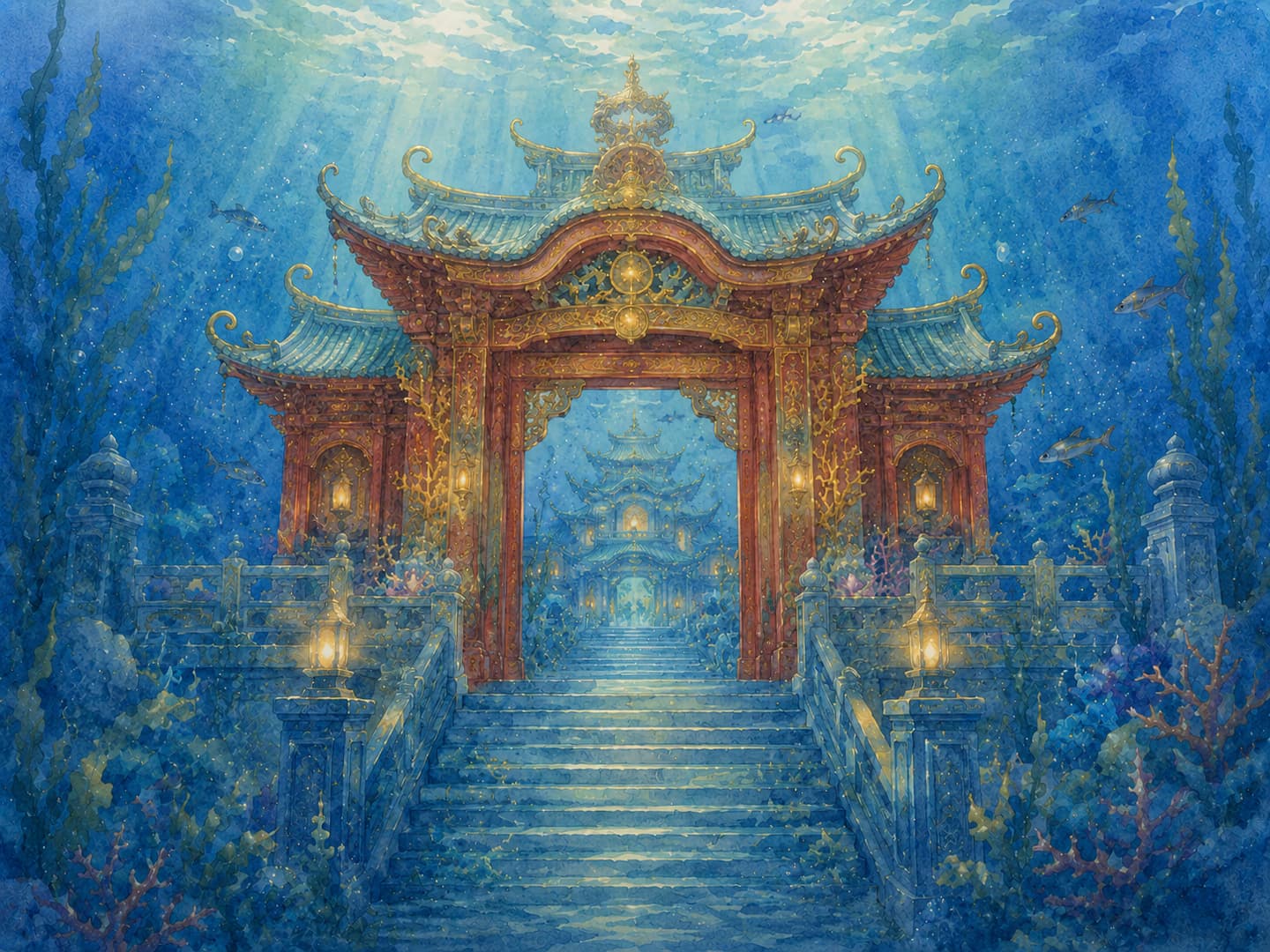
The Dragon Palace is not only an undersea wonder: it is the border where beauty, hospitality, and another measure of time…
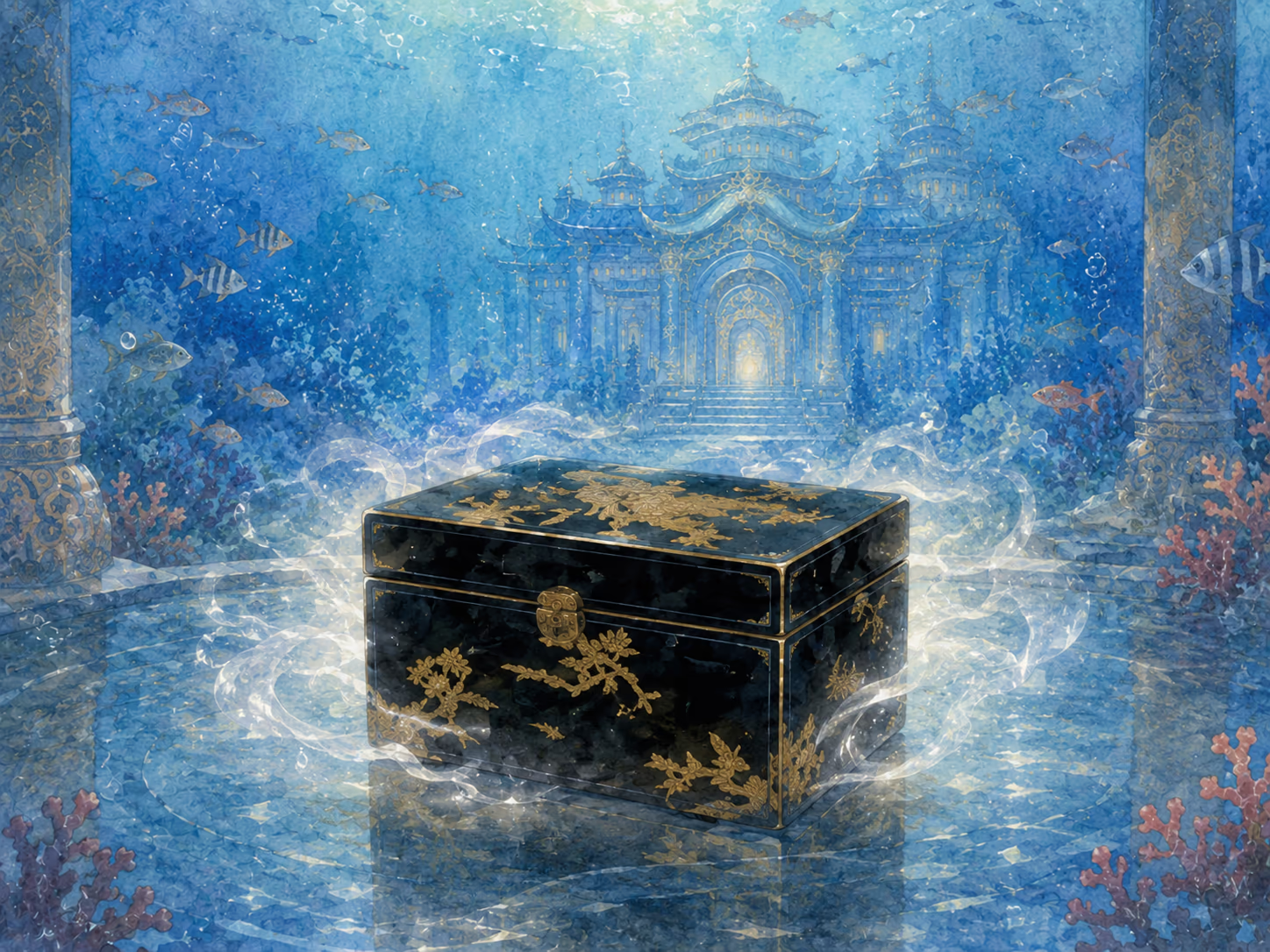
A small box from Ryugu-jo turns memory, promise, and lost time into the most haunting symbol of the Urashima Taro legend.
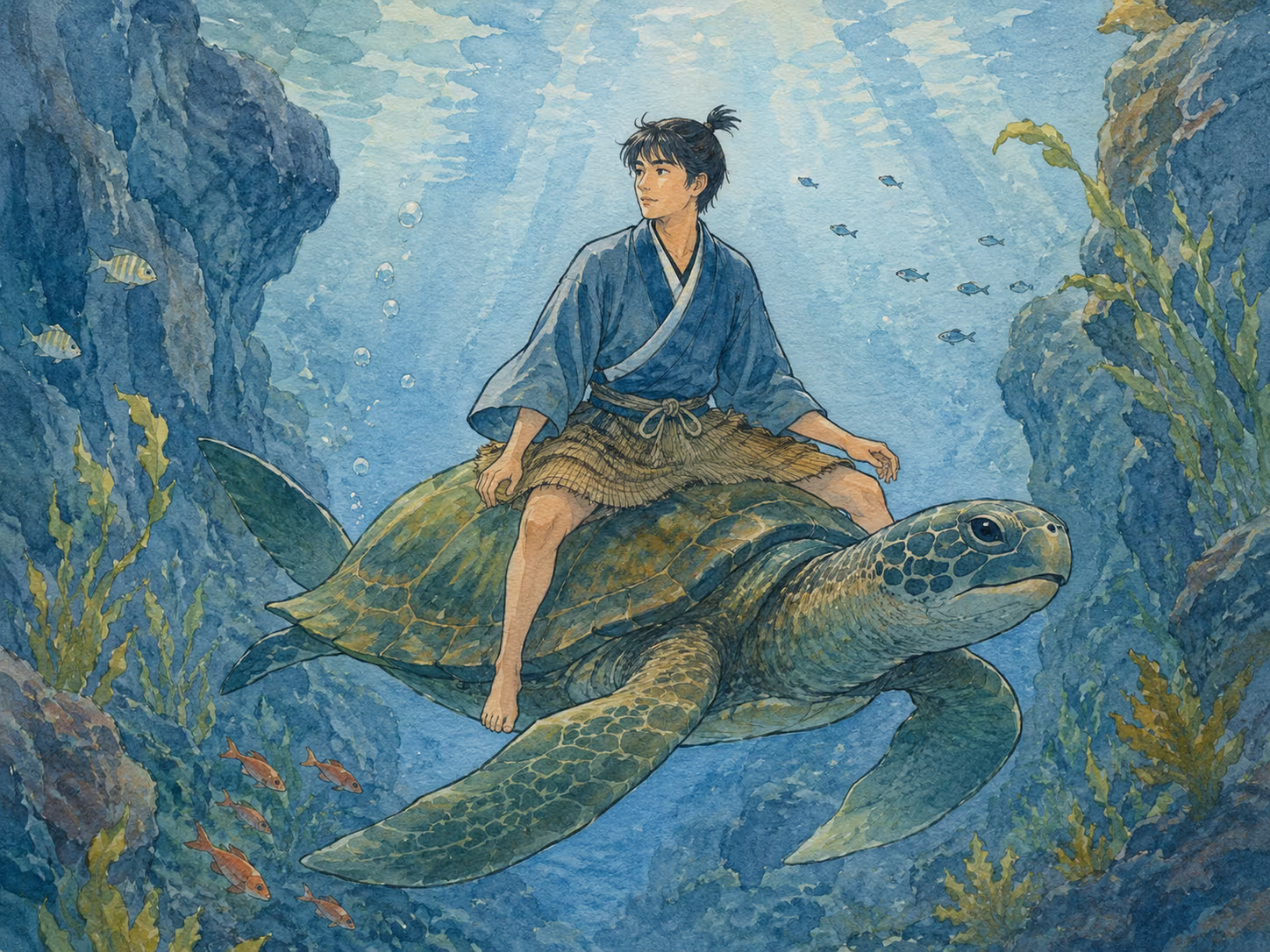
Read Urashima Taro, the Japanese legend of a fisherman who saves a turtle, visits Ryugu-jo, and returns with the mysterious…