Ryugu-jo: the Dragon Palace in Japanese folklore
Discover Ryugu-jo, the undersea Dragon Palace, and its ties to Otohime, Ryujin, and otherworldly time in Japanese folklore.
What is Ryugu-jo?
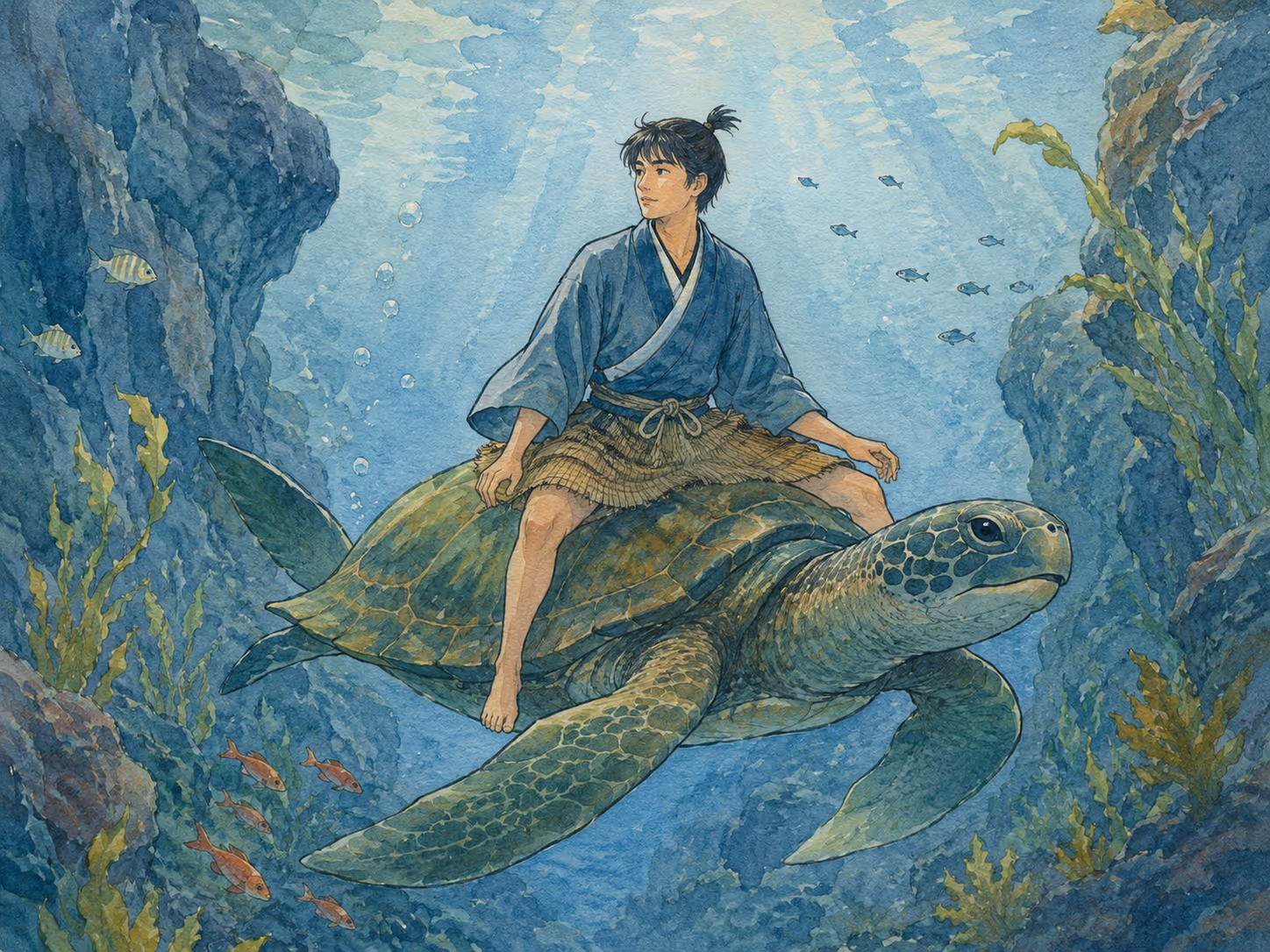
Ryugu-jo is the Dragon Palace, a wondrous undersea realm in Japanese folklore. In the Urashima Taro tradition, it is the place to which the turtle leads the fisherman after he saves a small creature on the shore.
The palace is not only a beautiful setting. It is an otherworld: a court beneath the sea, full of music, feasts, fish, shining halls, and its own logic. Whoever enters Ryugu-jo crosses a border between human life and the supernatural domain of the ocean.
That is why Ryugu-jo deserves its own page. It explains the atmosphere of the legend, the role of Otohime, the mystery of the tamatebako, and the sense that enchanted places offer beauty while charging an invisible price.
The meaning of the name Ryugu-jo
Ryugu-jo is commonly written 竜宮城 or 龍宮城. 竜/龍 indicates dragon; 宮 suggests palace, shrine, or noble residence; 城 means castle. The name can be understood as “Dragon Palace Castle,” or more naturally, “the Dragon Palace.”
The word already reveals something important: Ryugu-jo is not a simple undersea cave. It is imagined as a royal residence, with hierarchy, architectural beauty, and ritual distance from the ordinary world.
This palatial quality sets Ryugu-jo apart from many dangerous places in folklore. It does not appear first as a threat, but as an invitation. Its power lies in that mixture: welcoming, luxurious, and wondrous, yet belonging to an order the human visitor cannot control.
The undersea palace and its court
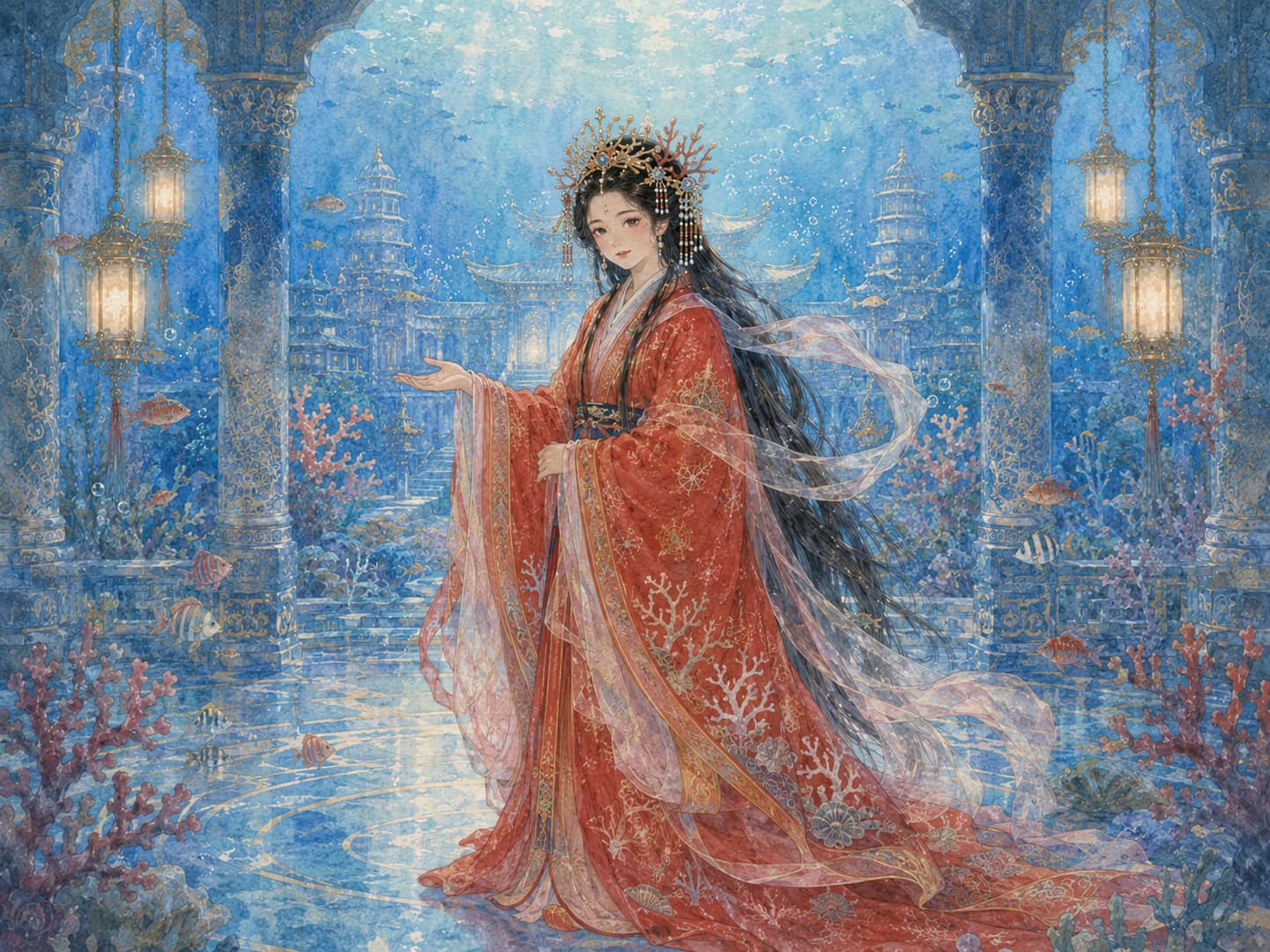
In popular imagery, Ryugu-jo combines noble architecture with marine elements: ornamented gates, luminous halls, columns, stairways, fish as attendants, turtle messengers, and water treated almost like sky or atmosphere.
The palace works as a court. There is reception, banquet, music, dance, and etiquette. The visitor does not enter a wild cave, but an organized space governed by rules and presented as higher than everyday life.
Otohime is the human face of that court. Through her, Ryugu-jo gains voice, gesture, and hospitality. The princess is not merely a resident of the palace; she expresses how that other world receives and tests those who arrive from the surface.
Ryujin, Otohime, and the authority of the sea
Ryugu-jo is often associated with Ryujin, the dragon or dragon god of the sea. In Japanese tradition, the sea dragon is linked with waters, tides, precious jewels, and the invisible power of the ocean.
In the Urashima tale, however, Otohime dominates the narrative scene. This creates a striking composition: Ryujin gives the palace its mythic grandeur, while Otohime gives emotional form to the encounter with the other world.
The authority of Ryugu-jo therefore appears not only as force. It appears as refined hospitality. The sea kingdom does not need to threaten the visitor to show power; it only has to welcome him so perfectly that ordinary life begins to feel far away.
Why does time pass differently in Ryugu-jo?
The most famous motif of Ryugu-jo is the difference in time. For someone inside the palace, the stay seems brief; in the human world, years or centuries may pass. This kind of difference appears in many stories about distant lands, marvelous islands, and realms of immortals.
Ryugu-jo belongs to this family of liminal places. It is near and far at once: beneath the sea, reachable by turtle, yet separated from human measure. The visitor enters a region where experience seems suspended.
The shock of return comes from that split. The palace offers beauty without apparent aging, but it does not stop the outside world. When the visitor comes back, ordinary time has continued without asking permission from enchantment.
Ryugu-jo as a Japanese otherworld
Ryugu-jo can be read beside other Japanese images of the otherworld: sacred mountains, distant islands, lands of immortals, and realms associated with Tokoyo, a remote or eternal dimension beyond ordinary experience.
The undersea palace combines two movements: descent and distance. It lies below the surface, but also outside everyday order. Entering Ryugu-jo is therefore a spiritual and narrative crossing, not merely a journey through the sea.
That detail deepens the legend. The palace is not only a reward for kindness; it is contact with a reality that changes the person. Whoever sees Ryugu-jo returns carrying beauty, but also estrangement.
The meaning of Ryugu-jo in the tale
Ryugu-jo represents the promise of wonder: a place where ordinary sorrow seems suspended, where the sea becomes a palace, and where the visitor is received as an honored guest.
But its meaning depends on return. If the palace were only paradise, the story would lose much of its force. What makes Ryugu-jo unforgettable is the discovery that enchantment does not erase time; it only makes time invisible for a while.
So Ryugu-jo is beauty and boundary. It gives form to the dream of escaping the human world, but also shows that every escape has a limit. The palace shines because it is outside time; the legend hurts because no one can remain there without losing something.
Index of Japanese terms
Ryugu-jo
The Dragon Palace, a wondrous undersea realm associated with Otohime, Ryujin, and the different flow of time outside the human world.
Ryujin
The dragon deity connected with the sea. In many traditions, Ryugu-jo is understood as the palace or domain of the Dragon King.
Otohime
The princess of the undersea palace. She personifies the hospitality, beauty, and courtly order of Ryugu-jo.
Tokoyo
An idea of a distant, eternal, or supernatural land. It helps frame Ryugu-jo as a place outside ordinary experience.
Tamatebako
The box that comes from Ryugu-jo. It carries the consequence of contact with the palace and its different time.
You might also like
The sea princess gives Ryugu-jo a human face: graceful, mysterious, generous, and bound to rules the visitor cannot fully…

A small box from Ryugu-jo turns memory, promise, and lost time into the most haunting symbol of the Urashima Taro legend.
Read Urashima Taro, the Japanese legend of a fisherman who saves a turtle, visits Ryugu-jo, and returns with the mysterious…