Princess Kaguya: origin, summary, and meaning
Guide to Princess Kaguya: the bamboo cutter, the Moon Princess, impossible tasks, the lunar procession, and the ache of farewell.
Story summary
An old bamboo cutter finds a tiny girl inside a shining stalk. He brings her home, where she is raised as a daughter and grows into a beauty who soon draws the attention of nobles and the court itself.
Kaguya receives powerful suitors, sets impossible tasks, and seems increasingly distant from ordinary life. As the Moon begins to fill her with sorrow, the tale reveals that her presence on Earth is more fragile and mysterious than anyone imagined.
Origin and tradition
The story of Princess Kaguya is best known through Taketori Monogatari, The Tale of the Bamboo Cutter, usually placed around the late ninth to tenth century. The work belongs to the aristocratic world of the Heian period and is often remembered as one of Japan’s earliest fictional narratives.
Unlike many mukashi banashi preserved mainly through oral tradition, Kaguya reaches us with a strong literary presence. The tale combines a popular motif, a child found miraculously, with courtly themes: noble suitors, impossible tasks, letters, poetry, etiquette, and the desire for prestige.
The tasks demanded of the suitors deepen that cultural richness. They involve marvelous objects from Buddhist, continental, and imaginary traditions, including the Buddha’s stone begging bowl, the jeweled branch of Horai, the fire-rat robe, the jewel from a dragon’s neck, and the shell from a swallow. Fantasy becomes a way to expose vanity, deception, and human limits.
Symbols in the tale
Bamboo is a passage between worlds. It grows straight, hollow, and resilient; in the tale, its shining interior turns an ordinary plant into a space of revelation. Kaguya comes from nature, but does not fully belong to it.
The Moon represents origin, distance, and return. It is visible to everyone but unreachable; it lights the night while remaining separate. That tension explains why Kaguya can be loved on Earth without ever being possessed by it.
The impossible tasks criticize the desire to turn beauty into social reward. Each suitor tries to prove worth through rare objects, but the tale exposes falsehood, ambition, and the inability to see Kaguya as someone with a will of her own.
Main characters
Kaguya-hime is radiant, reserved, and marked by sadness. She receives human love, yet her origin makes full adaptation to courtly life impossible. Her strength lies in refusing imposed destinies and preserving her own mystery.
The bamboo cutter and his wife represent everyday love facing the supernatural. They do not explain Kaguya; they care for her. That makes the separation painful, because the family bond was real even when the girl’s origin was impossible.
The suitors and the emperor represent different scales of social power. Some want to win Kaguya through prestige; another tries to protect her through authority. The tale shows that neither desire, wealth, nor political power can hold what belongs to another world.
Moral and meaning
Princess Kaguya does not fit a simple lesson. The tale speaks about impermanence: meetings, affections, and beautiful things can matter deeply precisely because they do not remain forever.
It is also a strong reflection on autonomy. Kaguya is desired, promised, guarded, and admired, but no one can turn her into a possession. Her figure resists the logic of reward, marriage, and control.
That is why the story remains so moving. It joins wonder and loss: Earth receives an impossible light for a while, learns to love it, and then has to face the limit of attachment.
Japanese terms index
Kaguya-hime
The princess’s name. Hime means princess or noble young woman, while Kaguya is often associated with the brightness and radiance of the character.
Taketori Monogatari
The Tale of the Bamboo Cutter, the classical Japanese narrative that tells Kaguya-hime’s story and is often treated as one of Japan’s earliest surviving works of fiction.
Taketori no Okina
The old bamboo cutter who finds Kaguya inside the glowing stalk and raises her as his daughter with his wife.
Tsuki
The Moon. In the tale, it is Kaguya’s origin and destination, but also a symbol of distance, inaccessible beauty, and separation.
Tennin
Celestial beings. In many versions, an otherworldly procession descends from the sky or the Moon with robes and music to bring Kaguya back to her realm.
Fushi no kusuri
The medicine of immortality. In the classical tradition, it appears near Kaguya’s farewell and deepens the theme of being unable to hold what belongs to another world.
related Japanese tales
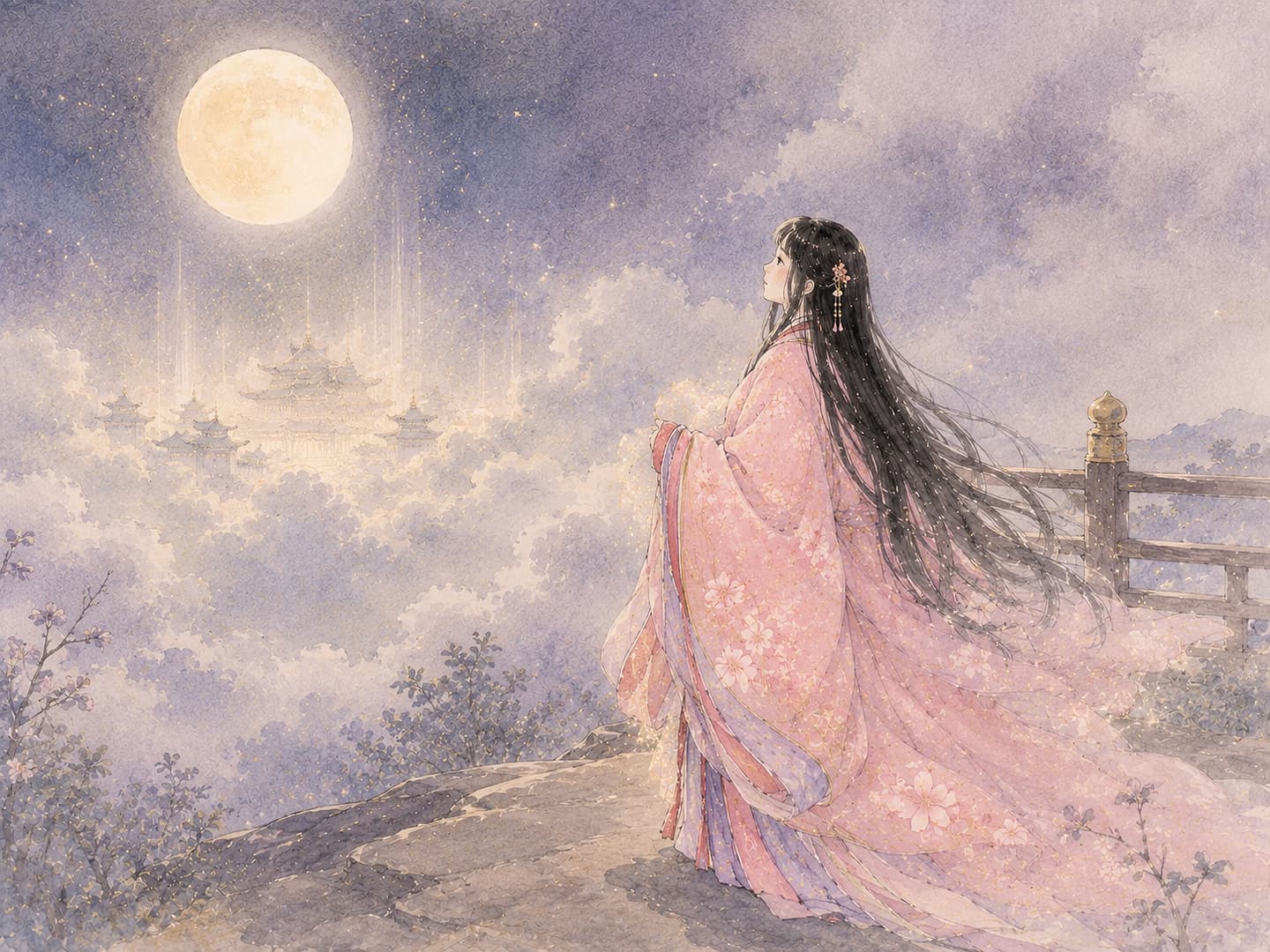
The cultural figure of Princess Kaguya: name, radiance, Moon, otherness, autonomy, and her lasting place in Japanese…
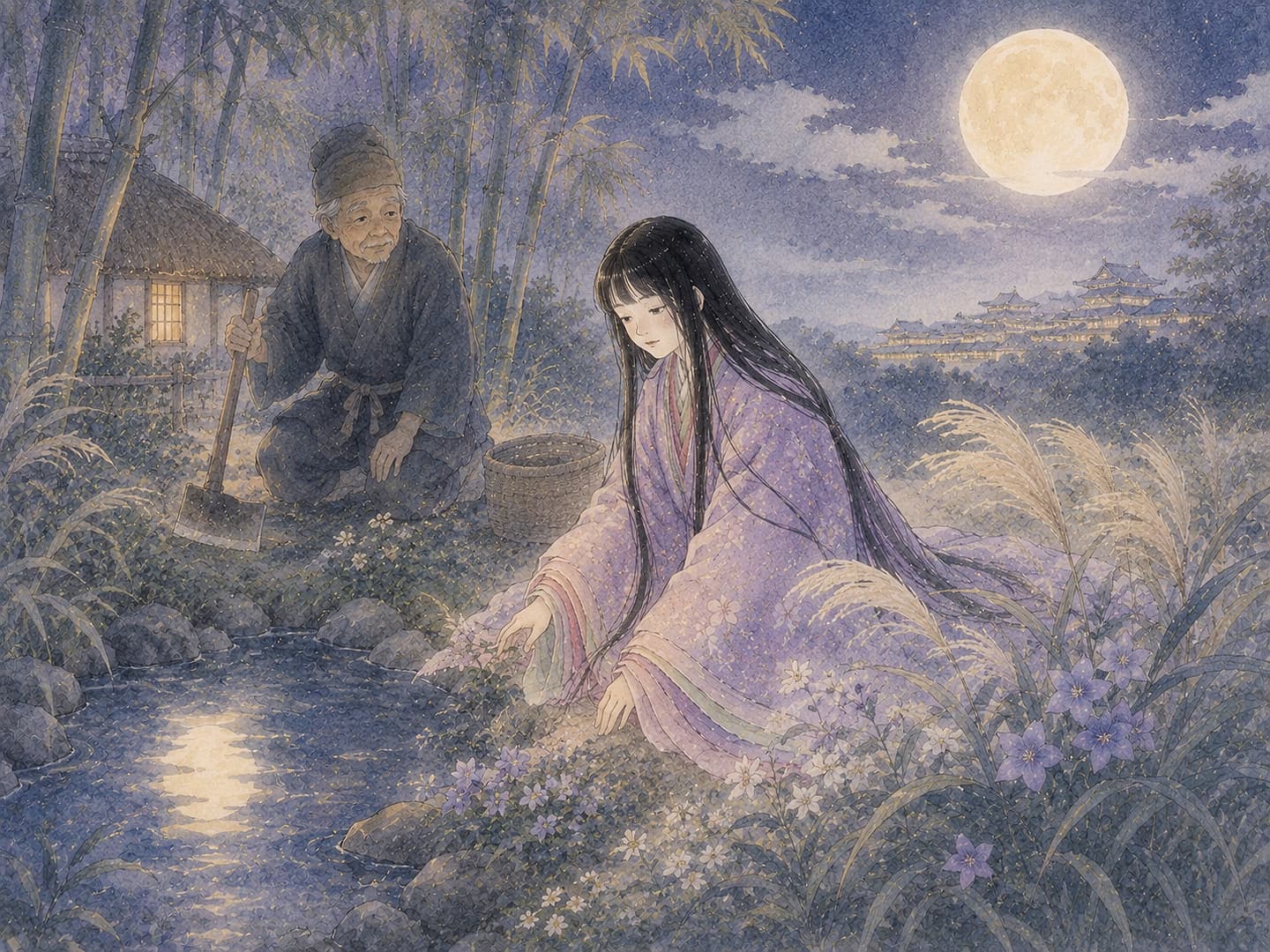
The classical work behind Princess Kaguya: monogatari, Heian court culture, humor, the Moon, and Kaguya-hime as literature.
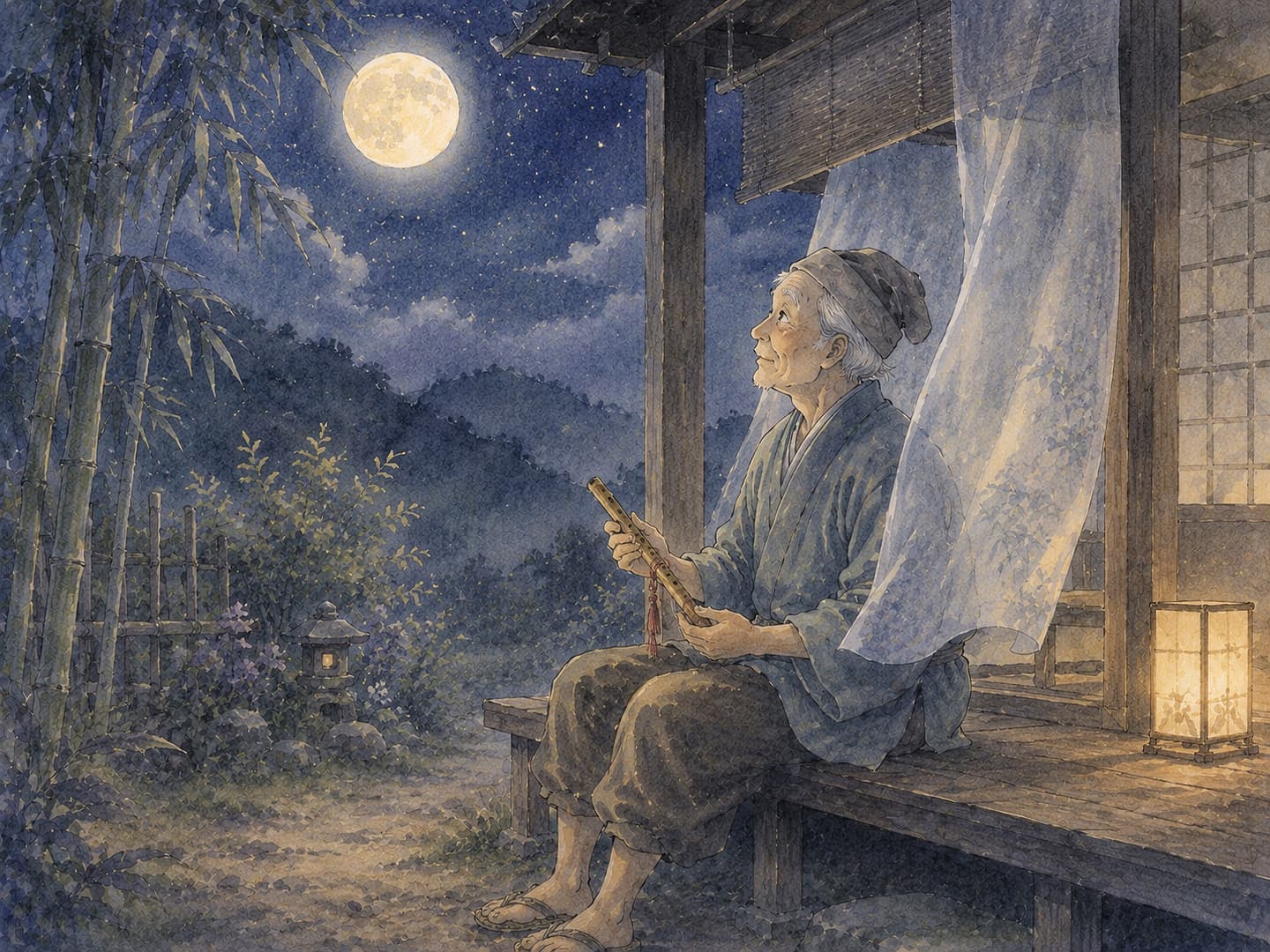
The old cutter as the human bridge of the tale: work, bamboo, adoption, household, wealth, and the limit before the Moon.
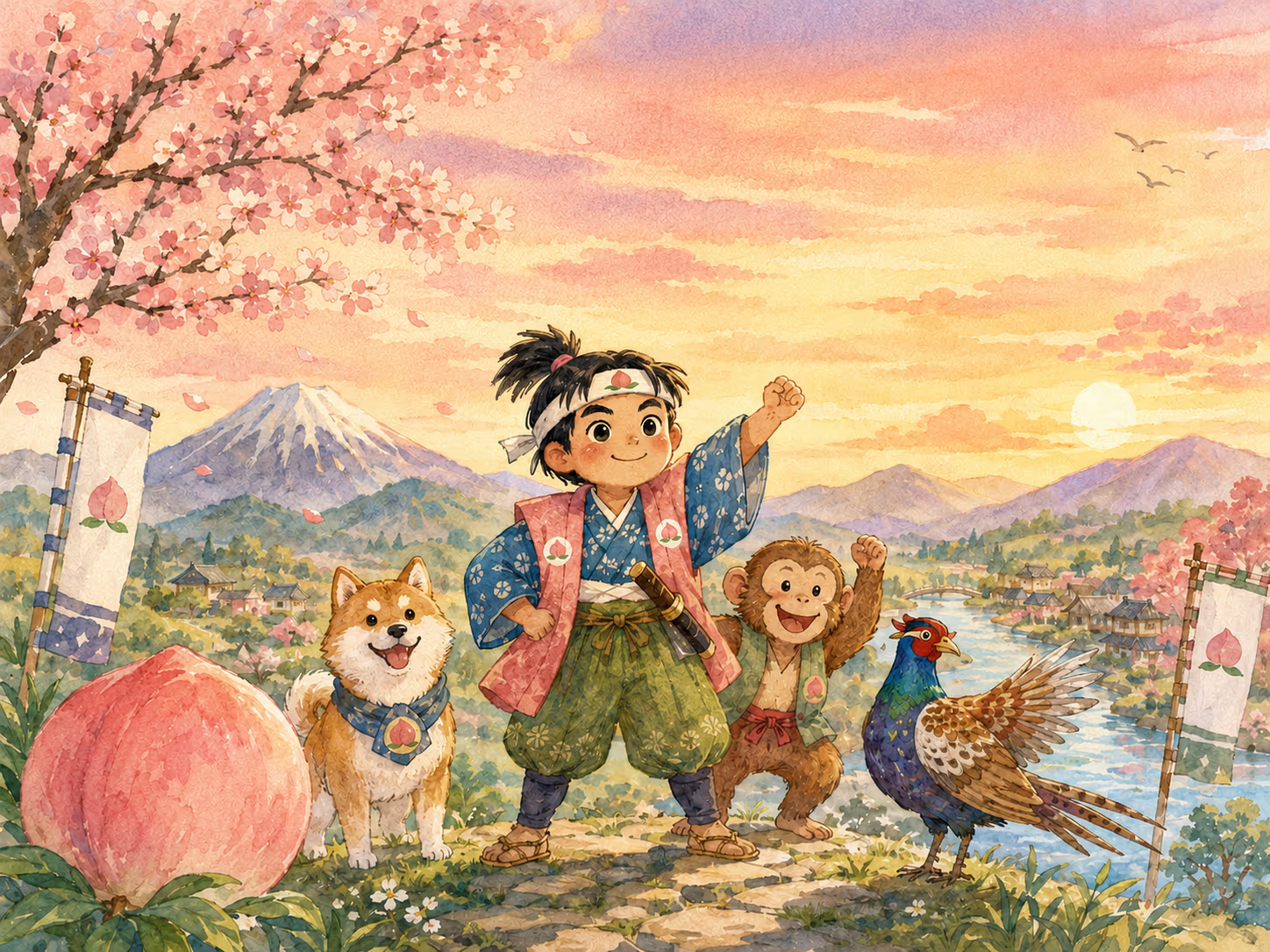
The Japanese folktale of Momotaro, the Peach Boy who travels with a dog, a pheasant, and a monkey toward Oni Island.
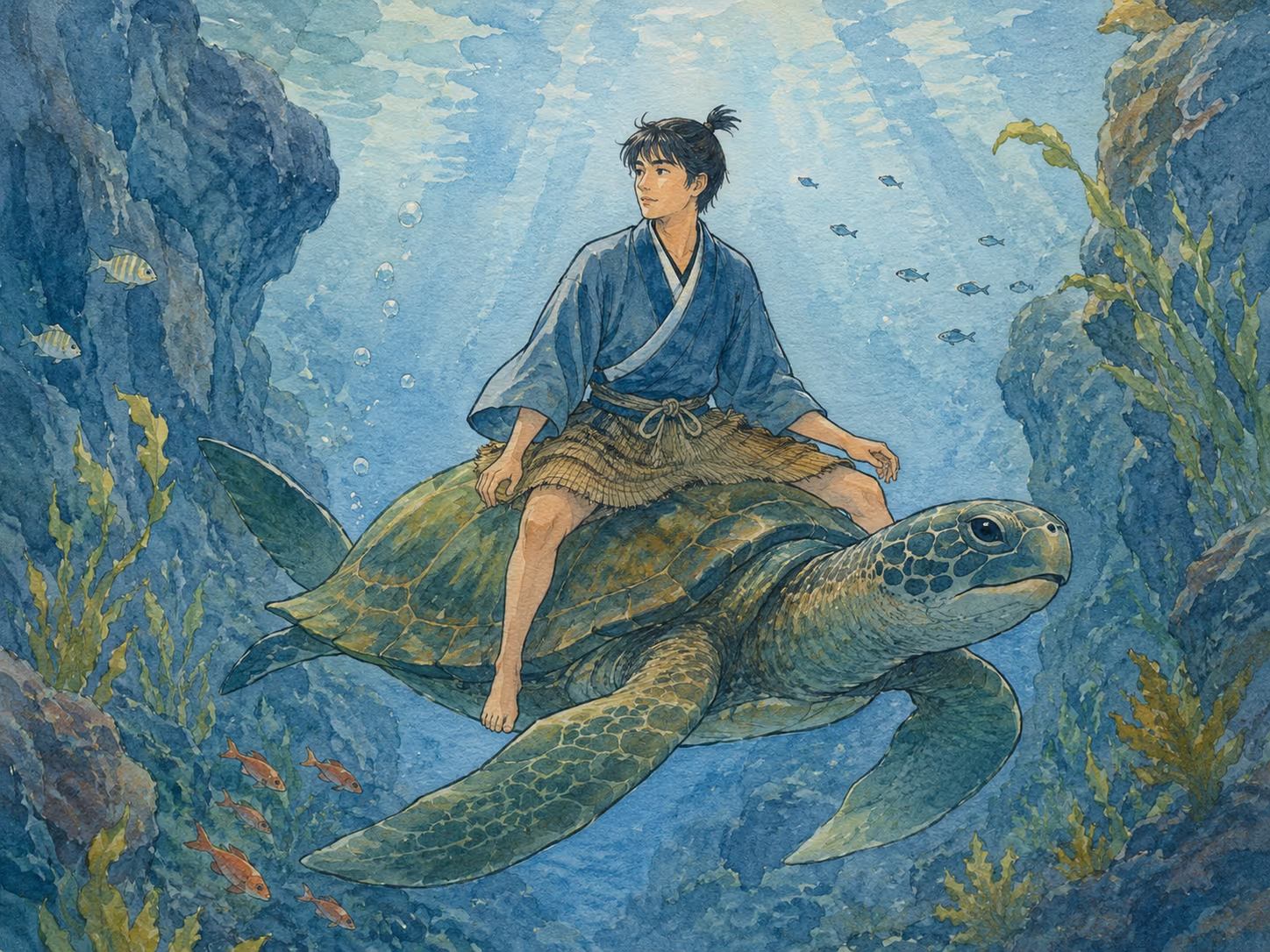
Read Urashima Taro, the Japanese legend of a fisherman who saves a turtle, visits Ryugu-jo, and returns with the mysterious…
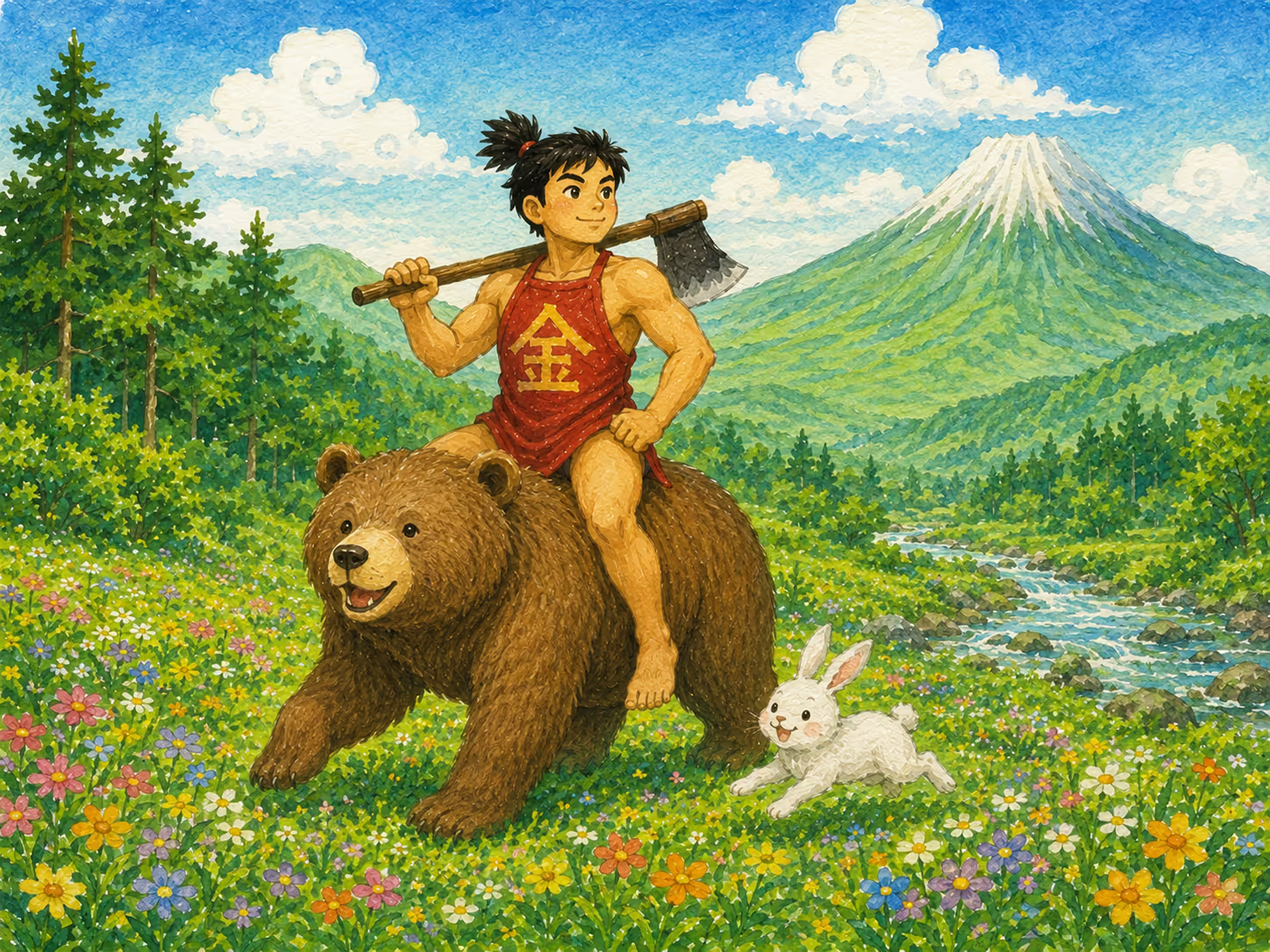
The Japanese tale of Kintaro, the strong boy of Mount Ashigara who grows up among animals and sets out toward the samurai…