Onigashima: Oni Island
Discover Onigashima, Momotaro’s Oni Island, and its role as a mythical border, enemy stronghold, and otherworld in Japanese folklore.
What is Onigashima?
Onigashima literally means Oni Island. In the tale of Momotaro, it is the distant place where the oni live, frighten people, and gather treasure. It is where the peach boy travels with the dog, monkey, and pheasant.
The island works as an adventure destination, but also as an image of the border. It is outside the village, outside the house, and outside ordinary order. To reach it, Momotaro has to cross the sea and leave familiar territory behind.
For that reason, Onigashima is not only the setting of the final battle. It is the name given to fear once fear receives an address. The story needs the island because danger has to be located before it can be faced.
The meaning of the name Onigashima
Onigashima is written 鬼ヶ島. 鬼 means oni; 島 means island. The small ヶ links the words together, forming the idea of “island of the oni.”
The name is direct, almost childlike, and that is exactly why it is strong. It does not explain everything; it announces. Before we know what the place looks like, we already know that ordinary human order does not govern it. The island belongs to oni.
That simplicity helps the tale remain memorable. Children immediately understand that Onigashima is dangerous, while closer readers can see that the island also organizes a symbolic geography: home, road, sea, otherworld, return.
The island as a border
In many tales, crossing water means crossing into a different zone of experience. The sea separates, protects, hides, and transforms. In Momotaro, the journey to Onigashima marks the passage from the domestic world to the territory of confrontation.
The crossing carries narrative weight. Momotaro does not meet the oni in the backyard; he must go to an island. That distance makes the threat larger and makes victory feel more meaningful. The hero does not merely defend home; he reaches the place where disorder gathers.
At the same time, the island keeps the oni from being an everyday problem. They belong to another space, set apart. Onigashima is the map of that separation: fear is outside, but not so far away that it cannot be faced.
Megijima and the cave of Onigashima
One of the best-known associations of Onigashima is Megijima, an island near Takamatsu in the Seto Inland Sea. The area preserves the so-called Onigashima Cave, a tourist cave presented as the former dwelling of the oni.
This identification should not be treated as literal proof that “the real Onigashima” has been found. It works better as a landscape of imagination: a real place that lets visitors walk inside a legend.
This kind of bond is common in folklore. Stories attach themselves to stones, caves, mountains, islands, and ruins because the body needs places in order to remember. Megijima gives material form to a question the tale leaves open: where would Oni Island be?
Kinojo, Ura, and the Kibi layer
Okayama traditions offer another layer for Onigashima. Instead of thinking only of a maritime island, they connect Momotaro with the old Kibi region, the legend of Ura, and the ruins of Kinojo, a fortress in the mountains.
In this context, the “territory of the oni” can take the shape of a stronghold, a political border, and regional memory. Ura, the oni defeated by Kibitsuhiko-no-Mikoto, links the children’s tale with local narratives of conflict and authority.
The richness of Momotaro lies in this overlap. Onigashima can be an adventure island for children, a visitable cave on Megijima, a symbolic memory of Kibi fortresses, and a mythic space where each region projects its own version of fear.
Treasure, stronghold, and fear
In popular versions of Momotaro, the oni keep treasure on Onigashima. This detail turns the island into more than a nest of monsters. It is also a place of accumulation, excess, and wealth taken by force.
The oni stronghold gathers what the community has lost or fears losing: safety, goods, peace, and order. When Momotaro recovers treasure, the act symbolizes the return of something separated from the human world.
Onigashima therefore carries a double tension. It frightens because it is the home of oni, but it also attracts because it contains what has been stolen, hidden, or concentrated far from the village. The island is fear and desire in one image.
The meaning of Onigashima in the tale
Onigashima is where Momotaro proves that his courage is not only a promise. Until the crossing, he is the boy born from a peach, raised by old people, and accompanied by animals. On the island, all of that has to become action.
The island also gives meaning to the companions. The dog, monkey, and pheasant reveal their full value only when they face a difficult space, guarded by many oni and organized as enemy territory.
At heart, Onigashima represents the border every community needs to imagine in order to speak about fear. It places danger on an island so the tale can cross toward it, overcome it, and return. That is why Momotaro’s journey is not only a battle: it is the trip to the place where fear lives.
Index of Japanese terms
Onigashima
Oni Island in the tale of Momotaro. It is the place where the hero travels with his companions to face the danger beyond the human world.
Megijima
An island in the Seto Inland Sea associated, in local and tourist traditions, with the image of Onigashima and the caves of the oni.
Kinojo
Ruins of an ancient fortress in Okayama connected with Kibi traditions and the legend of Ura, often brought into the imaginative orbit of Momotaro.
Setonaikai
The Seto Inland Sea, a maritime region that gives geographic texture to the islands, crossings, and borders in many readings of Momotaro.
Ura
The oni of Kibi traditions. His legend offers a regional layer for understanding why oni strongholds and islands matter so much in the memory of Momotaro.
You might also like
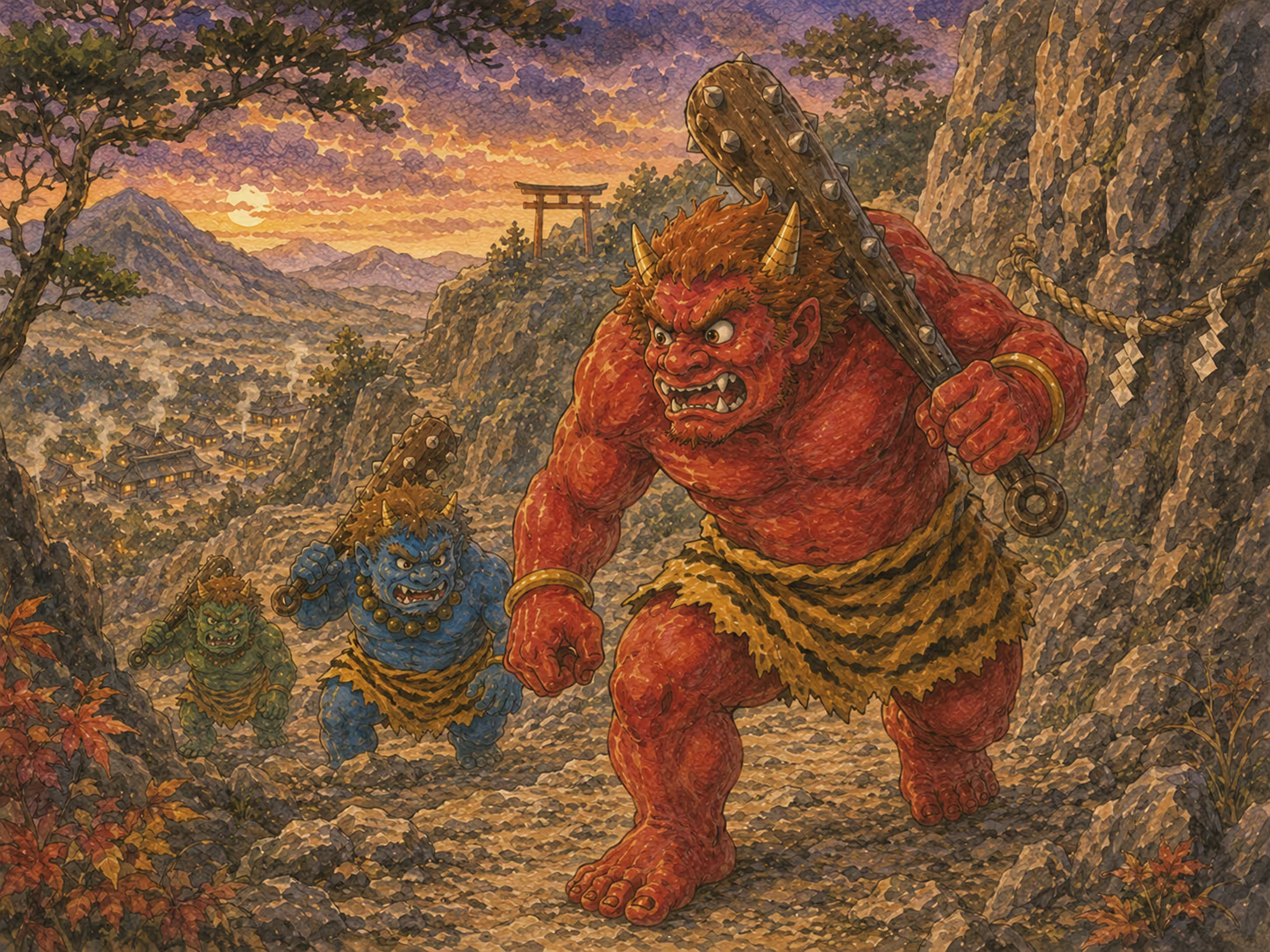
Learn what oni are in Japanese folklore and how their image embodies power, fear, punishment, boundaries, and ritual meaning.
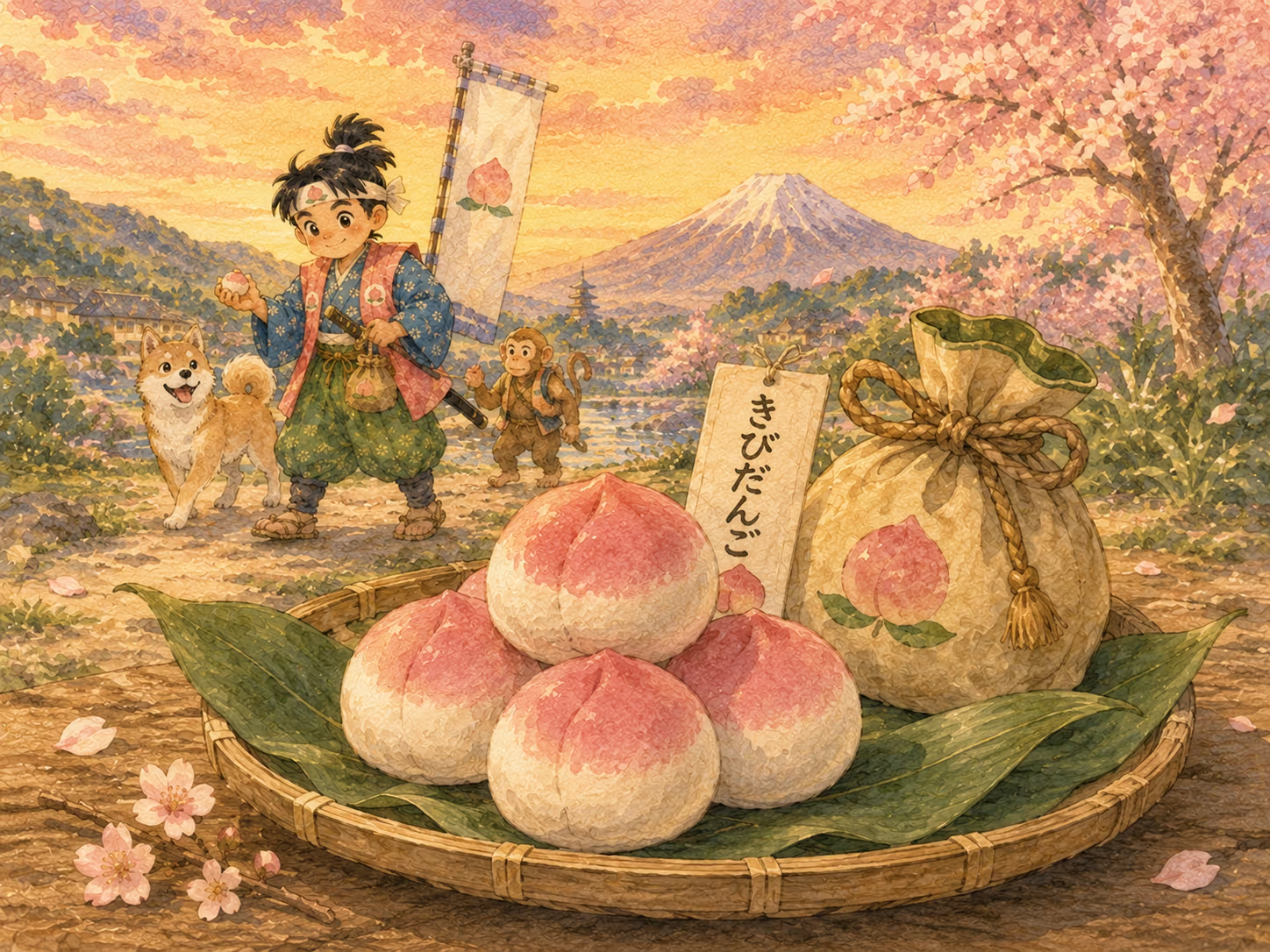
In Momotaro, kibidango is not just food: it is the small gesture that creates trust before battle.
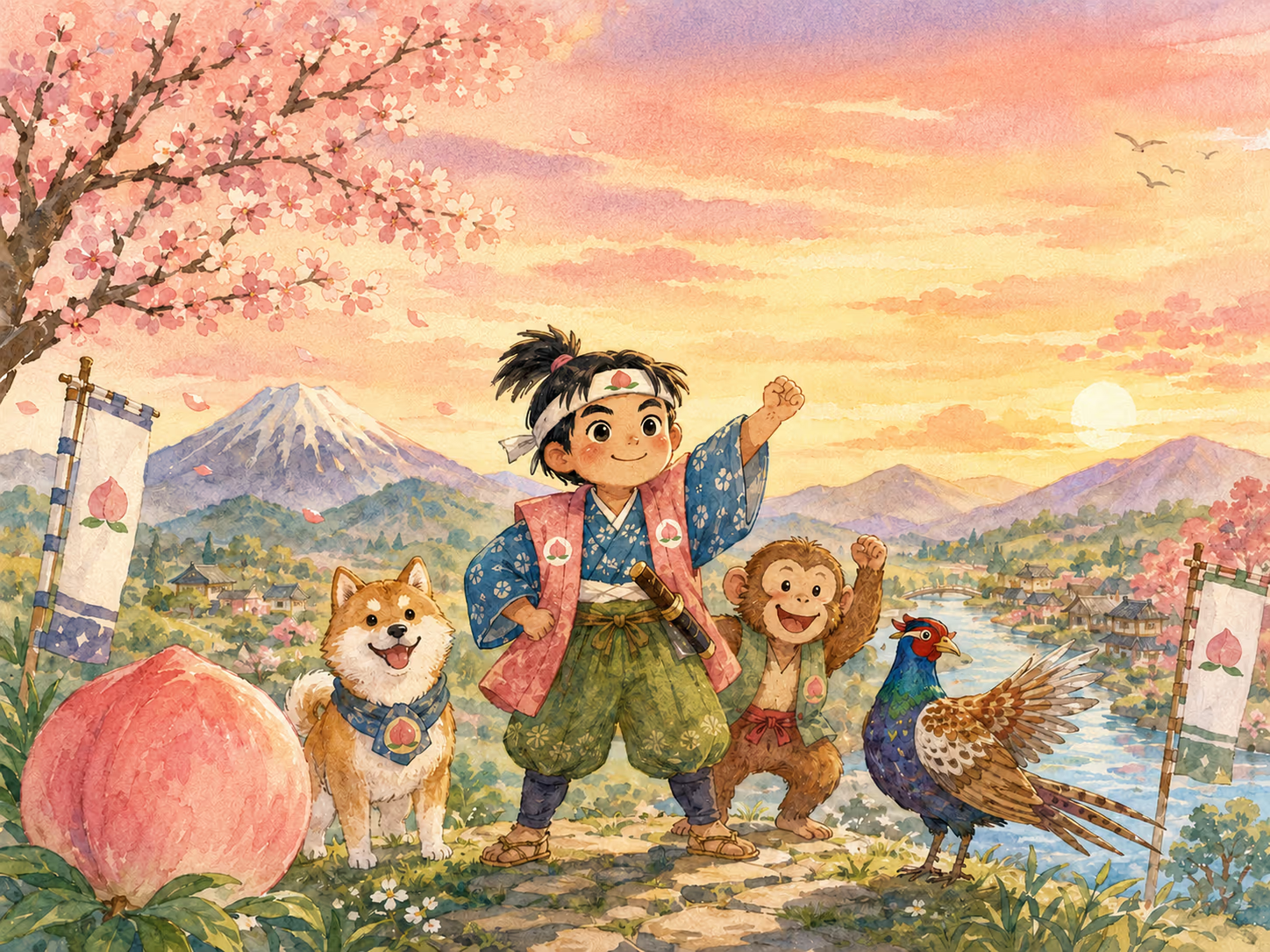
The Japanese folktale of Momotaro, the Peach Boy who travels with a dog, a pheasant, and a monkey toward Oni Island.