Oni: the ogres of Japanese folklore
Learn what oni are in Japanese folklore, why they appear in Momotaro, and how they represent strength, fear, and the border of human order.
What are oni?
Oni are among the most recognizable creatures in Japanese folklore. They often appear as huge, violent beings with horns, fangs, red, blue, or green skin, and an iron club in their hands.
Translating oni as “demons” can work in some contexts, but it narrows the idea. Oni can also be ogres, monsters, violent spirits, guardians of Buddhist hells, mountain beings, or figures that embody illness, disaster, and collective fear.
Rather than a single fixed species, the oni is a folkloric way of imagining what threatens ordinary life. It gives a body to excess: too much force, hunger, rage, or power. That is why oni remain so present in stories, festivals, masks, and popular images of Japan.
The appearance of oni
The popular image of an oni combines horns, wild hair, fangs, claws, colored skin, and a tiger-skin loincloth. This appearance is not random: the oni’s body becomes a visual sign of wildness, distance, and threat.
The kanabo, the iron club, strengthens that reading. An oni is already powerful; armed with a kanabo, it becomes almost impossible to face with ordinary strength. That is why folktale heroes rarely win simply by being more brutal. They need wit, allies, protection, or moral authority.
Color also helps organize the imagination. Red, blue, and green oni appear in images and narratives as variations of energy, aggression, and strangeness. In Momotaro, several oni make the island feel like an entire world of hostile forces, not just the home of one monster.
The role of oni in Momotaro
In Momotaro, the oni are the threat that pushes the hero out of the house. Without them, the story would be only the miracle of the boy born from a peach. With them, the tale gains journey, conflict, and a moral question: what should a community do when its fear has a face?
Oni Island gathers everything outside the village: distance, danger, treasure taken by force, and a life beyond human measure. Momotaro crosses the sea to face that place, but he does not go alone. The dog, monkey, and pheasant turn the battle into cooperation.
That structure matters. The oni are not there only to be defeated; they reveal the quality of the hero. Momotaro wins because he shares kibi dango, creates alliances, and turns a personal mission into collective action.
Oni, Setsubun, and driving out misfortune
Oni also appear outside folktales, especially during Setsubun. In this seasonal observance, families and temples throw roasted soybeans while expressing the wish to drive oni out and bring good fortune in.
The gesture is simple but powerful: what threatens the home is pushed outside. The oni becomes a ritual figure of bad luck, illness, winter, and impurities that must be expelled before a new cycle begins.
This helps explain why oni are so flexible. They can be battle monsters in Momotaro, but also festival masks, teaching figures for children, and images of everything a community wants to control, purify, or place outside the door.
Ura and the regional layer of Okayama
The regional reading of Momotaro becomes richer with Ura, the oni connected with the old Kibi region, now associated with Okayama. In local traditions, Ura is defeated by Kibitsuhiko-no-Mikoto, a figure tied to shrines and historic landscapes of the region.
This layer does not replace the children’s version of Momotaro, but it deepens it. It suggests that behind the simple tale of the peach boy there are memories of borders, conflict, authority, and local identity.
That is why the oni of Momotaro can be read on two levels at once. For children, they are frightening monsters. For a closer reading of folklore, they also preserve traces of how a region narrates victory over what it considered dangerous, foreign, or outside its order.
Are oni always evil?
In children’s tales, oni often stand in the place of the enemy. That clarity helps the story work: there is a threat, a hero, a crossing, and a return. But in Japanese folklore, oni are not always simple caricatures of evil.
They can be punishers, guardians, forces of nature, converted beings, comic figures, or characters that reveal human fear of those who live at the margins. The question “what is an oni?” often overlaps with another question: who is being called a monster?
That ambiguity makes the figure last. A flat villain disappears when the story ends; the oni remains because it carries contradiction. It frightens, amuses, punishes, protects, and reminds us that every culture creates images for what it cannot fully domesticate.
The meaning of oni in the tale
In Momotaro, oni give form to outside danger. They live far away, hoard treasure, frighten people, and force the hero to cross the sea. They are fear placed outside the house, outside the village, and outside normal life.
But the tale does not end as force against force. Momotaro faces the oni because he has built a network of companions. The monster reveals the hero, and the hero reveals that courage without cooperation would be incomplete.
So the oni are essential to the meaning of the tale. They make visible the conflict between order and disorder, home and border, community and threat. By defeating them, Momotaro does not simply win a battle: he restores to the human world the sense that fear can be faced when no one has to walk alone.
Index of Japanese terms
Oni
Powerful beings in Japanese folklore, often translated as ogres or demons. In tales such as Momotaro, they represent danger, brute strength, and the world beyond the human village.
Kanabo
An iron club often associated with oni. The expression “oni with a kanabo” suggests someone already strong becoming even more formidable.
Onigashima
Oni Island in the Momotaro tale. It is the place where danger gathers and where the hero crosses from the human world into the territory of fear.
Setsubun
A seasonal observance in which roasted soybeans are thrown to drive oni away and welcome good fortune. “Oni wa soto, fuku wa uchi” means “oni out, fortune in.”
Ura
An oni connected with the Kibi traditions of present-day Okayama. The legend of Ura is often read as an important regional layer behind Momotaro.
You might also like
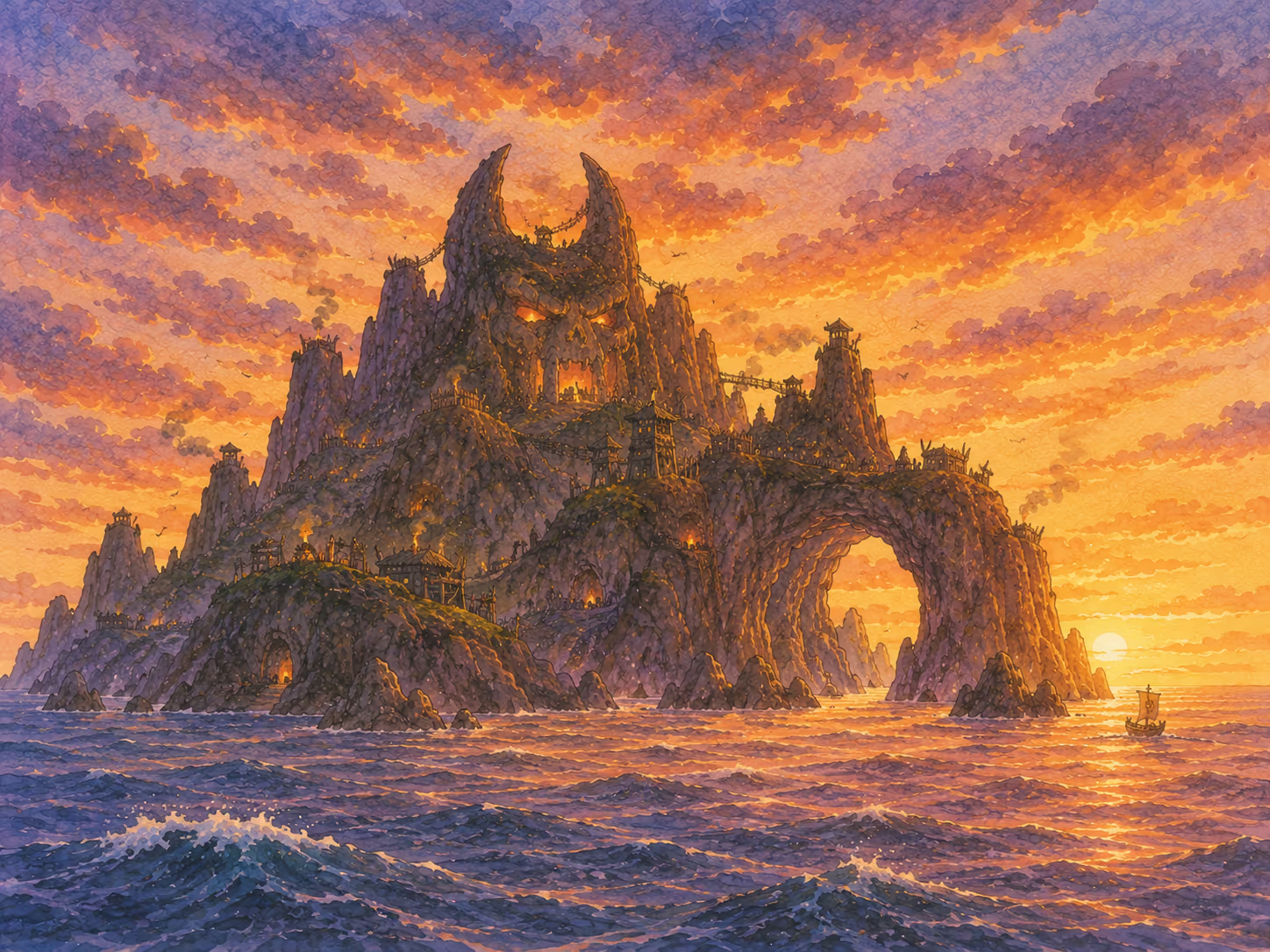
Oni Island is more than a battle destination: it is where Momotaro crosses the sea and faces fear beyond the village.
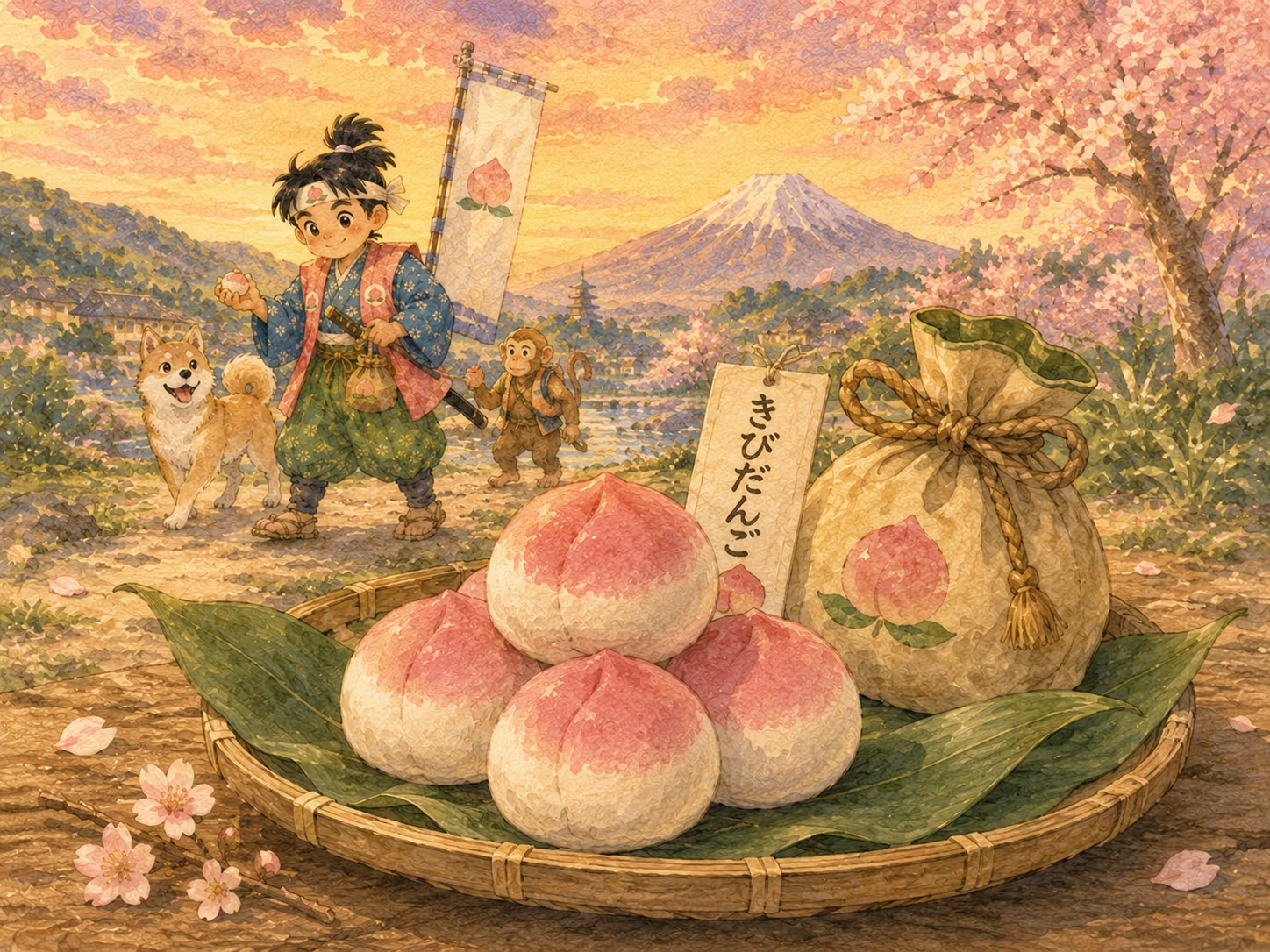
In Momotaro, kibidango is not just food: it is the small gesture that creates trust before battle.
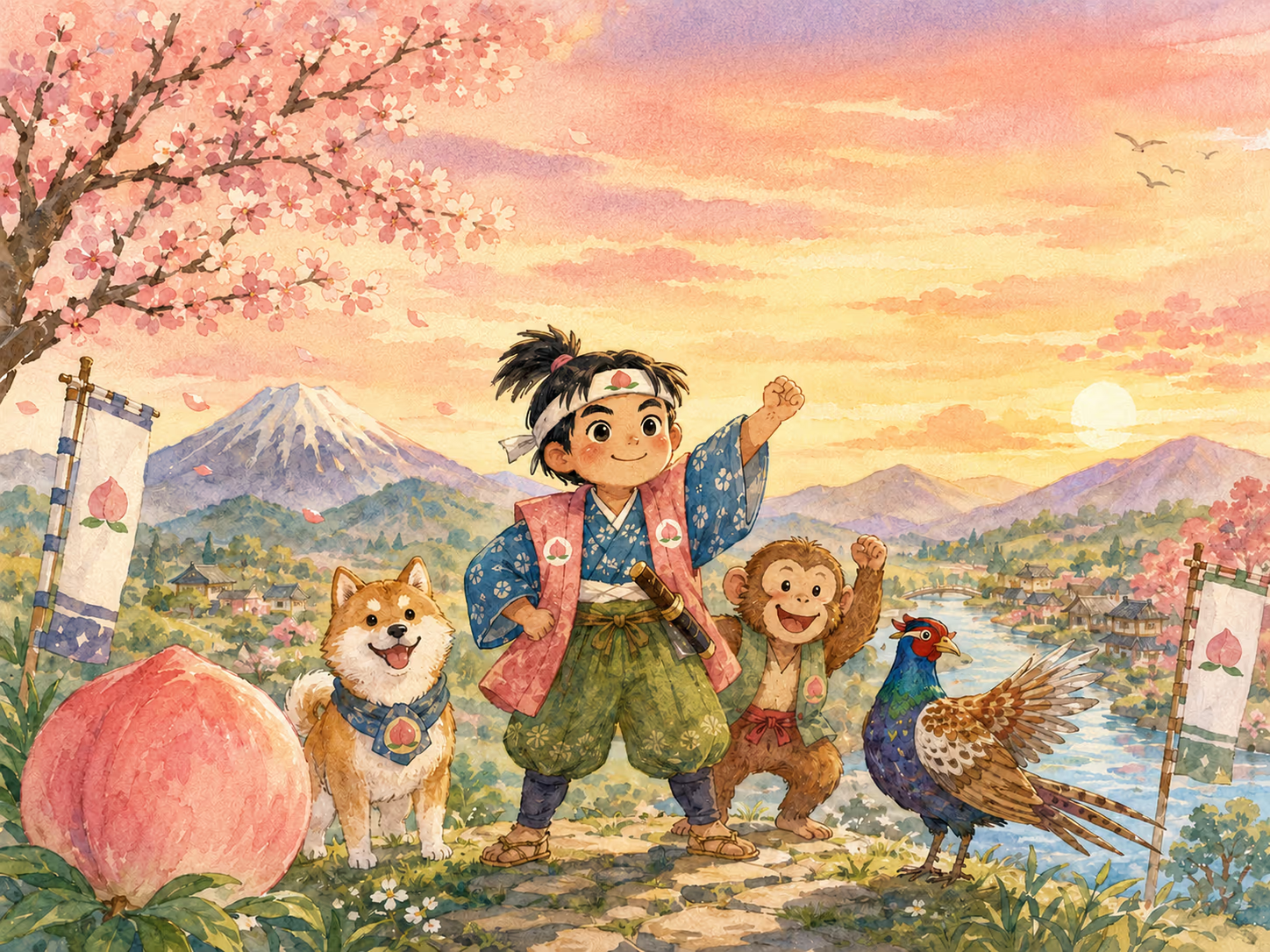
The Japanese folktale of Momotaro, the Peach Boy who travels with a dog, a pheasant, and a monkey toward Oni Island.