Kibidango: Momotaro’s dumpling
Understand Momotaro’s kibidango: the dumpling tied to Kibi and Okayama that turns travel food into a pact of courage and alliance.
What is kibidango?
Kibidango is the dumpling Momotaro carries on his journey to Oni Island. In the tale, it seems like simple food prepared for the road, but it becomes one of the most important objects in the story.
When the dog, monkey, and pheasant meet Momotaro, each receives a piece of kibidango. The food creates a pact: they stop being chance encounters along the path and become part of the mission.
That is why the dumpling deserves its own page. In a story full of miraculous birth, oni, and battle, kibidango shows that the adventure begins with a small gesture: sharing something brought from home.
Kibi, dango, and the play of meanings
The name kibidango can be written in ways that bring food and geography together. 黍団子 points to dumplings connected with kibi, a grain such as millet. 吉備団子, meanwhile, highlights Kibi, the old region associated with Okayama.
This double reading is precious for Momotaro. The dumpling is food, but it also carries territory. It belongs to the table, the road, and the regional identity that made Okayama one of the places most strongly tied to the peach boy.
In practice, modern Okayama kibidango has become a sweet souvenir and an affectionate local symbol. Inside the tale, however, it preserves something older: the idea of portable, simple food able to sustain a crossing.
Travel food and memory of home
Before setting out, Momotaro receives food prepared for the journey. This detail may seem too domestic for a heroic adventure, but that is exactly what makes it powerful. The hero does not leave empty-handed; he carries the mark of the home that raised him.
Kibidango works as a bridge between home and road. It remembers the care of the old couple, but it also becomes a resource for dealing with the world outside the village. What begins in the kitchen turns into an instrument of courage.
This passage is one of the beauties of the tale. Momotaro’s strength does not come only from his sword or miraculous origin. It passes through something ordinary: food that can be kept, divided, and offered.
The dumpling as a pact of alliance
The moment Momotaro gives kibidango to the animals is decisive. He does not buy servants or force allies into obedience. He offers part of what he has and receives companionship, loyalty, and abilities different from his own.
Each animal expands the hero’s reach. The dog brings scent, attack, and fidelity; the monkey brings agility and practical intelligence; the pheasant occupies the sky, watches, and strikes from another angle. The dumpling stitches these differences into a team.
For that reason, kibidango is more than a reward. It is a language of trust. Before facing the oni, Momotaro must show that he can share, recognize value in others, and turn meeting into commitment.
Kibidango and Okayama
Kibidango is now one of the best-known food symbols of Okayama, a city and region strongly associated with Momotaro. This connection is not only commercial: it reinforces the way a tale can become local identity.
In Okayama, Momotaro appears in statues, souvenirs, sweets, and tourist references. Kibidango belongs to that world because it turns a scene from the tale into something that can be bought, carried, gifted, and eaten.
This material quality matters. Many elements of folklore survive because they take everyday form: a festival, a shrine, a ruin, a mask, or a sweet. In Momotaro, kibidango brings the story out of the page and into sensory memory.
Why do the animals follow Momotaro?
The simplest answer is: because they receive kibidango. But the symbolic force of the scene lies in what that exchange represents. The animals do not follow only a piece of food; they follow a newly created relationship.
In folktales, shared meals and food gifts often seal bonds. Eating what someone offers can indicate trust, hospitality, or entry into a small community. Momotaro creates his traveling community in exactly this way.
That reading makes the companions less decorative. They are not accessories to the hero, but partners formed by a pact. The dumpling is the starting point of an ethic of cooperation: each one receives, each one contributes, and all of them cross together.
The meaning of kibidango in the tale
Kibidango concentrates one of Momotaro’s most beautiful ideas: courage has to be nourished by bonds. The hero does not win because he carries magical food, but because he knows how to turn food into alliance.
This small dumpling links home, region, journey, and battle. It comes from the domestic world, crosses the road, gathers animals, and symbolically reaches Onigashima as proof that Momotaro is not alone.
In the end, kibidango teaches that great adventures sometimes depend on minimal gestures. Sharing food may seem simple, but in the tale that gesture changes everything: before it, there is a boy traveling; after it, there is a company able to face the oni.
Index of Japanese terms
Kibi dango
The dumpling associated with the tale of Momotaro. In the story, it is shared with the dog, monkey, and pheasant, creating the alliance that makes the journey possible.
Kibi
An old region connected with present-day Okayama. The name gives the dumpling an important regional identity in Momotaro traditions.
Dango
A Japanese dumpling made in small rounded portions, often associated with rice, grains, or sweet doughs in different regional recipes.
Momotaro
The peach boy. On his journey to Oni Island, he uses kibidango to form a small company of allies.
Onigashima
Oni Island. The kibidango matters because it is offered on the road to this place of danger and confrontation.
You might also like
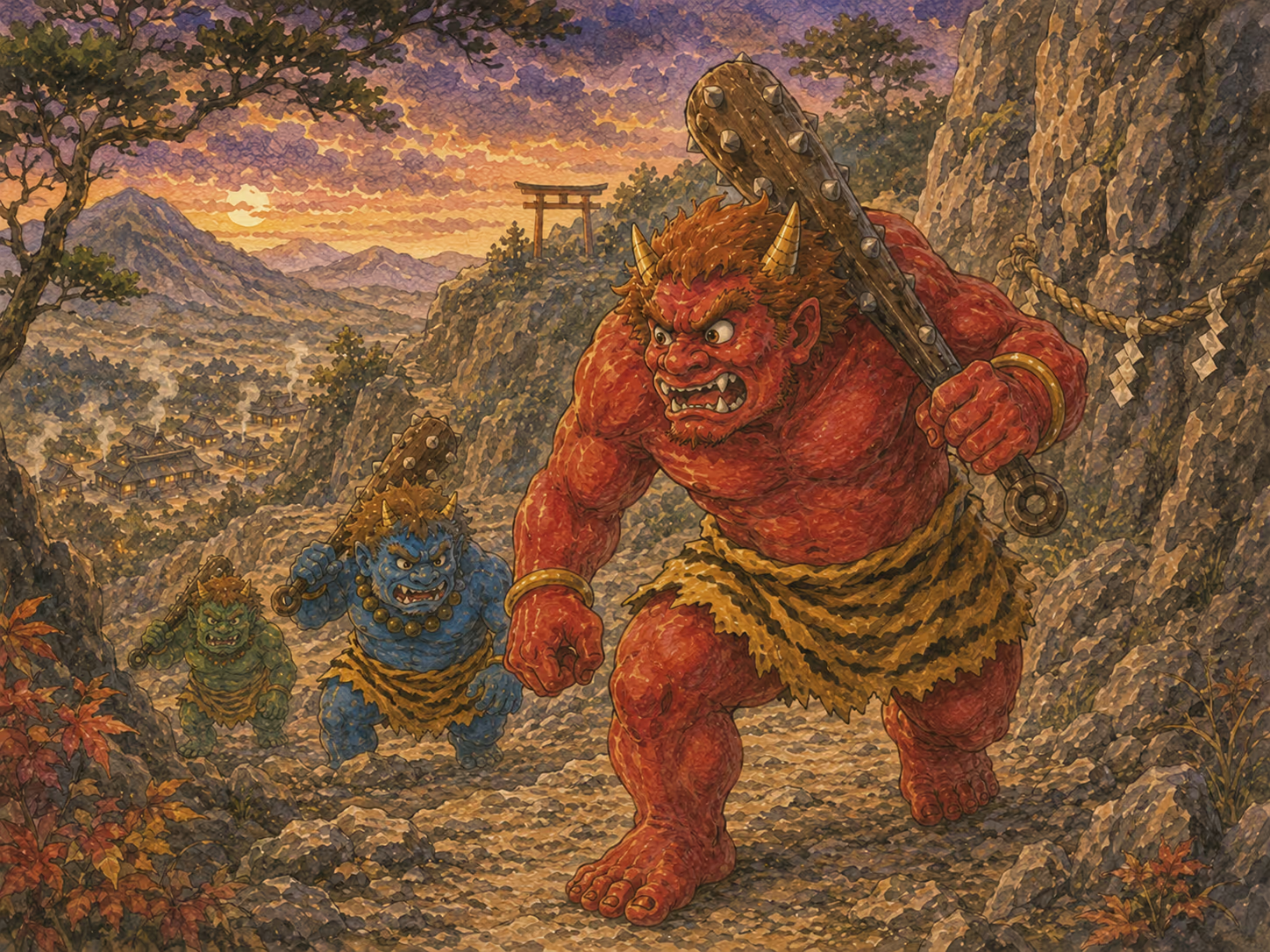
Learn what oni are in Japanese folklore and how their image embodies power, fear, punishment, boundaries, and ritual meaning.

Oni Island is more than a battle destination: it is where Momotaro crosses the sea and faces fear beyond the village.
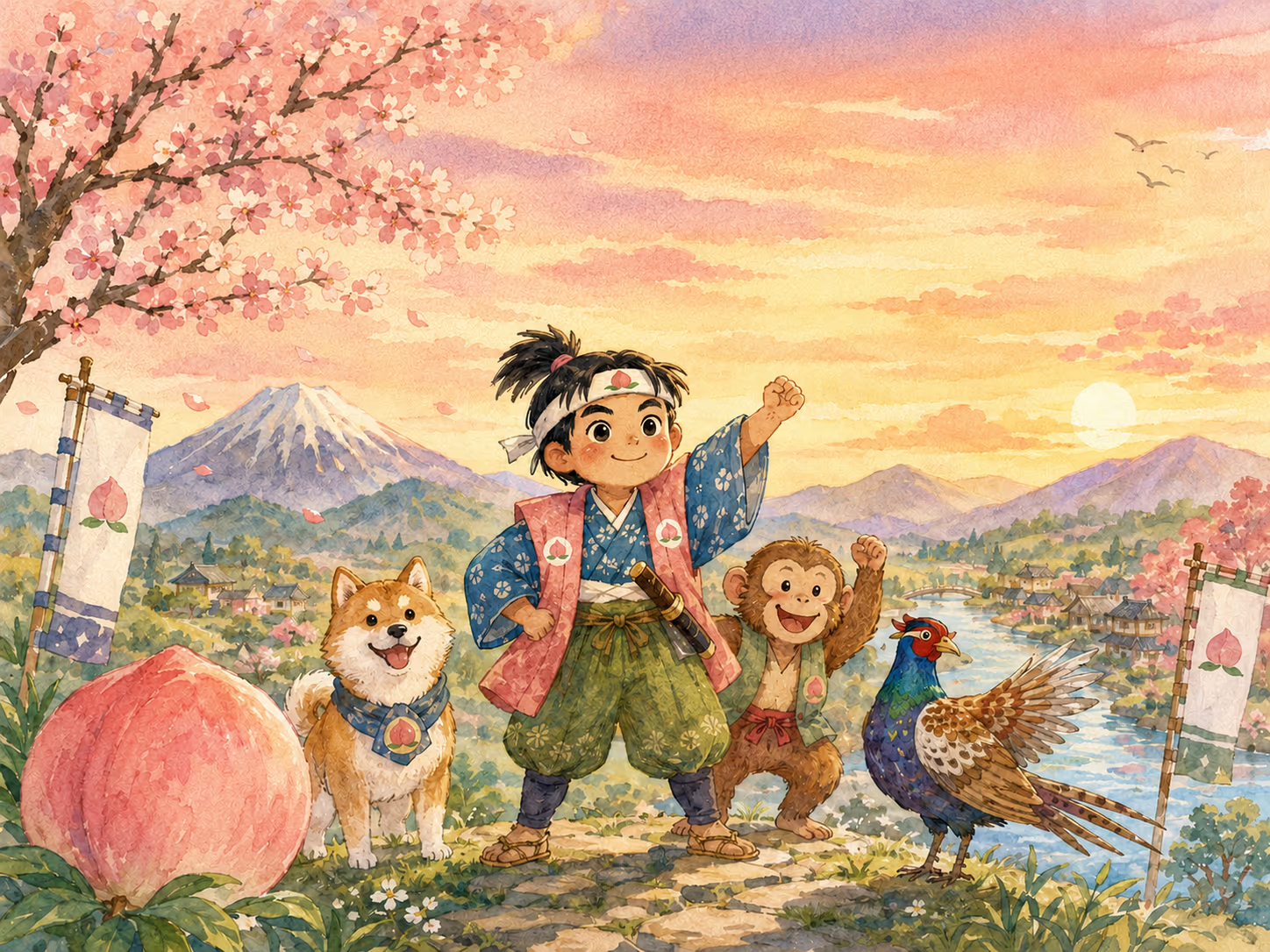
The Japanese folktale of Momotaro, the Peach Boy who travels with a dog, a pheasant, and a monkey toward Oni Island.