Urashima Taro: origin, summary, and meaning
Guide to Urashima Taro: Japanese folklore, Ryugu-jo, Otohime, tamatebako, and the meaning of time lost at sea.
Story summary
Urashima Taro is a young fisherman who saves a small turtle on the beach. In gratitude, he is taken to Ryugu-jo, the Dragon Palace, an undersea realm where music, feasting, and beauty seem to suspend time.
When homesickness begins to call him back, Taro receives a mysterious box from Otohime, the tamatebako, with the command not to open it. Returning to the shore, he discovers that the journey into the sea has changed his relationship with time and with the place he once called home.
Origin and tradition
Urashima Taro belongs to the world of mukashi banashi, but its roots are older than the modern children’s version. The story speaks to traditions about Urashima no ko or Ura no Shimako, associated with classical records such as the Tango Fudoki, the Man’yoshu, and the Nihon Shoki.
Over time, the narrative took on the familiar shape of the kind fisherman, the turtle, Otohime, Ryugu-jo, and the tamatebako. Illustrated Muromachi-period otogi-zoshi versions helped turn this cluster of motifs into a recognizable popular tale.
That history explains the legend’s strength. Urashima Taro is a sea story, a moral tale, and an otherworld narrative at once: it speaks about gratitude, taboo, enchantment, and the difference between human time and supernatural time.
Objects and symbols in the tale
The turtle is messenger and threshold. In Japanese imagery, turtles suggest longevity, protection, and a bond with the sea; in Urashima Taro, the turtle recognizes the fisherman’s kindness and carries him beyond ordinary life.
Ryugu-jo is the tale’s otherworld. The palace is beautiful, abundant, and seductive, but also dangerous because it follows its own rules. Otohime’s hospitality does not erase the risk: in the sea realm, time, memory, and promise carry a different weight.
The tamatebako concentrates that mystery in one object. It looks like a farewell gift, but it works as a boundary: while it remains closed, it preserves the distance between worlds; once opened, it returns what enchantment had hidden.
Main characters
Urashima Taro represents an ordinary person who acts with compassion before thinking of reward. That makes his journey more ambiguous: kindness opens the door to wonder, but does not protect him from every consequence.
Otohime is the hostess of the undersea realm and the tale’s most enigmatic figure. She welcomes Taro, offers beauty and abundance, and gives him the box that carries the story’s central rule.
The turtle connects shore and palace, human world and sea world. It turns a good deed into a mythic crossing, which makes it as important as the human characters in the legend.
Moral and meaning
The most direct lesson is about keeping promises: Taro receives one condition and suffers when he breaks it. But the legend reaches beyond a simple lesson about obedience.
Urashima Taro is about the pull of the unknown, homesickness, and the impossibility of returning exactly to the starting point. The fisherman returns to the shore, but he no longer finds the same world or the same time.
That is why the story remains powerful: it turns a sea adventure into a meditation on loss, memory, and enchantment. The forbidden box does not hold only smoke; it holds the distance between what Taro experienced and the life that continued without him.
Index of Japanese terms
Urashima Tarō
The Japanese name of the protagonist. Tarō is a traditional and very common male name.
Mukashi banashi
A term for old tales and folk narratives passed down from generation to generation.
Ryūgū-jō
The Dragon Palace. In the legend, it is a marvelous undersea realm tied to the sea, enchantment, and a passage of time unlike human time.
Otohime
The princess of the undersea palace. In many versions, she welcomes Urashima Taro, hosts his stay, and gives him the tamatebako when he leaves.
Tamatebako
The mysterious box given to Urashima Taro. It looks like a gift, but it symbolically concentrates lost time and the rule he must not break.
Otogi-zōshi
Illustrated popular narratives from medieval Japan, important for fixing familiar versions of tales already circulating through older records and traditions.
You might also like
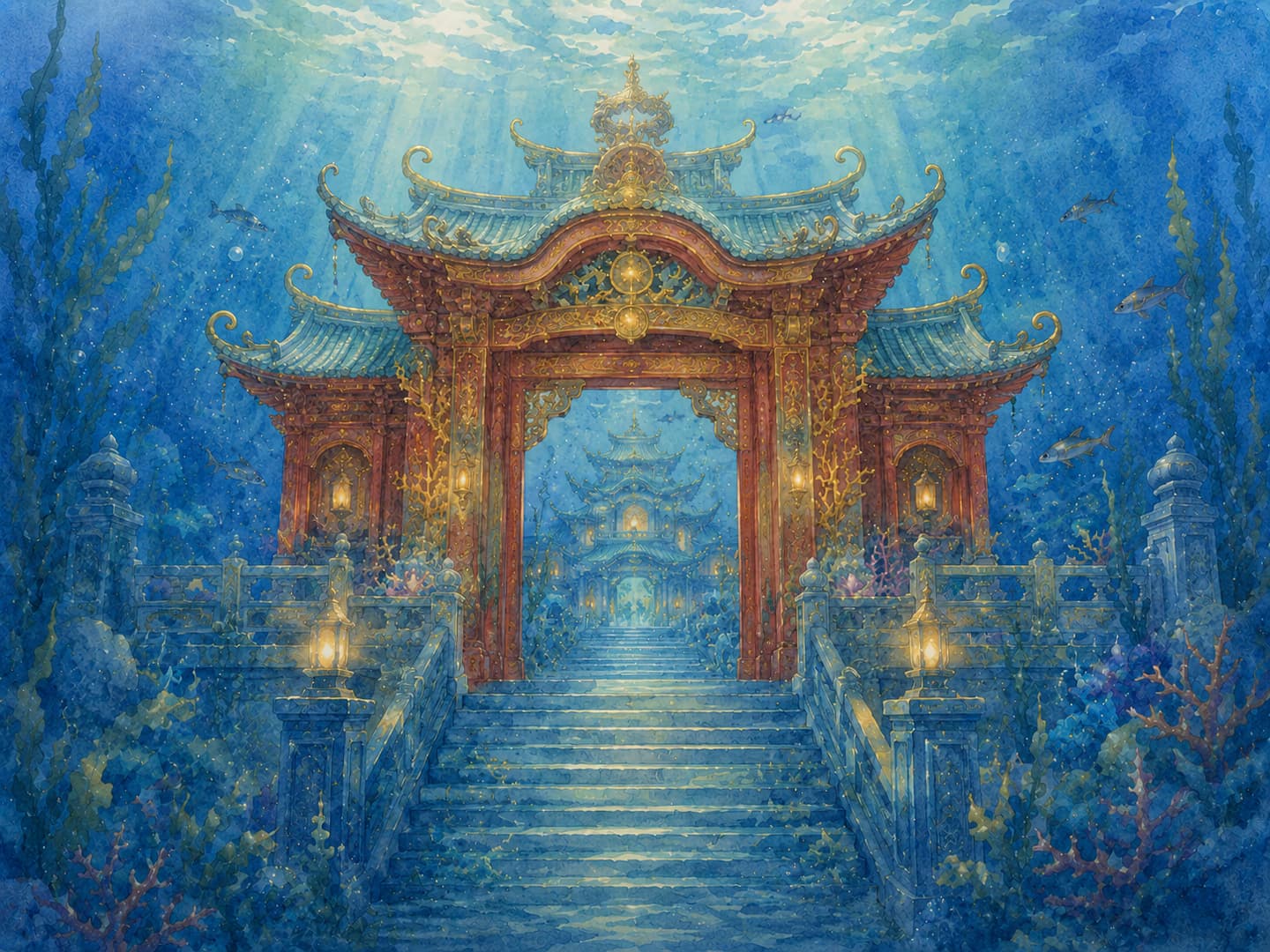
The Dragon Palace is not only an undersea wonder: it is the border where beauty, hospitality, and another measure of time…
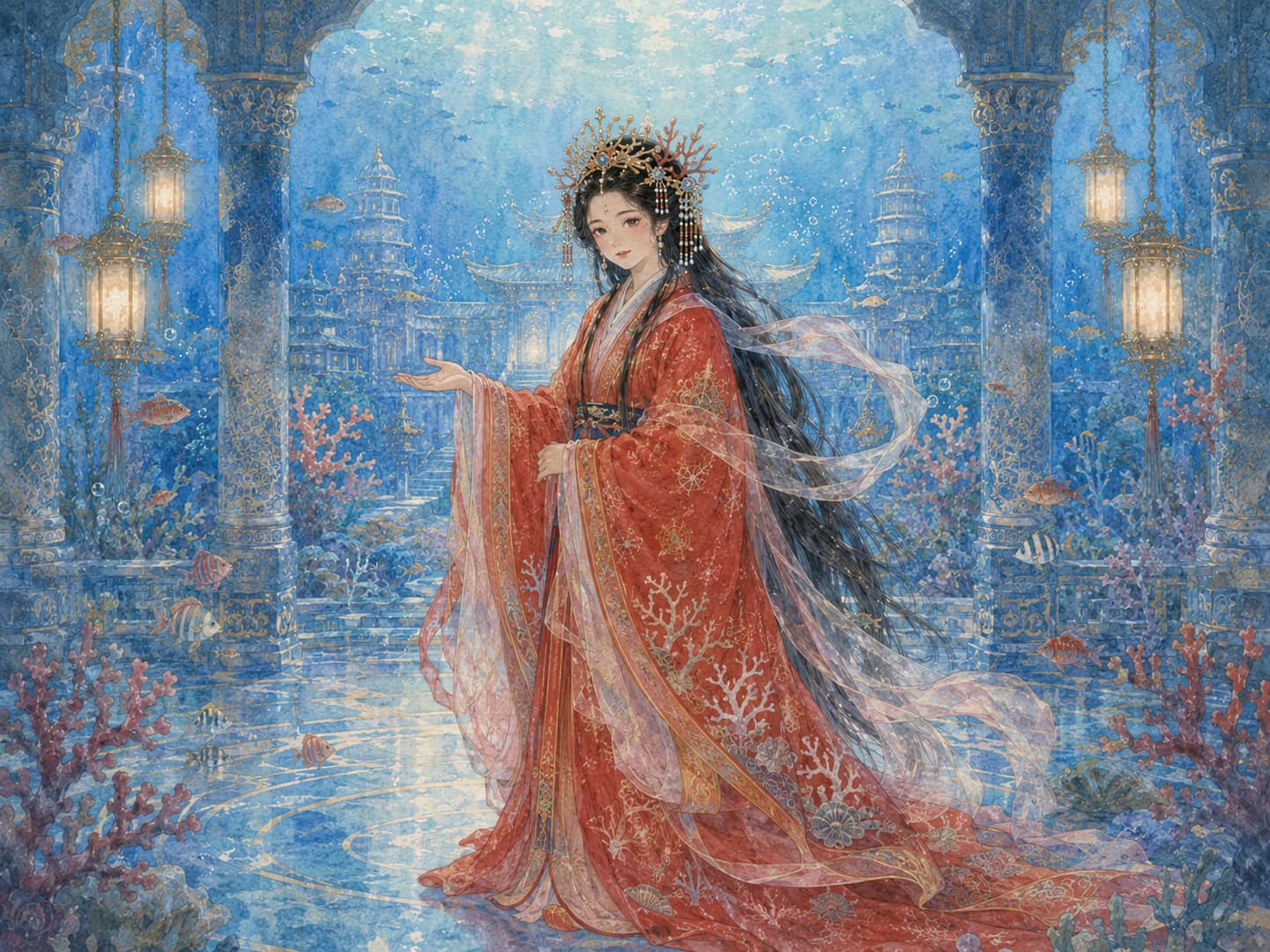
The sea princess gives Ryugu-jo a human face: graceful, mysterious, generous, and bound to rules the visitor cannot fully…

A small box from Ryugu-jo turns memory, promise, and lost time into the most haunting symbol of the Urashima Taro legend.
The Japanese folktale of Momotaro, the Peach Boy who travels with a dog, a pheasant, and a monkey toward Oni Island.
The Japanese tale of Kaguya-hime, the Moon Princess found inside bamboo and raised between affection, mystery, and fate.

The Japanese tale of Kintaro, the strong boy of Mount Ashigara who grows up among animals and sets out toward the samurai…