Jorogumo: the spider woman of Japanese folklore
Meet Jorogumo, the spider woman of Japanese folklore: seduction, threads, waterfalls, Edo-period tales, emotional danger, and the boundary between beauty and trap.
Who is Jorogumo?
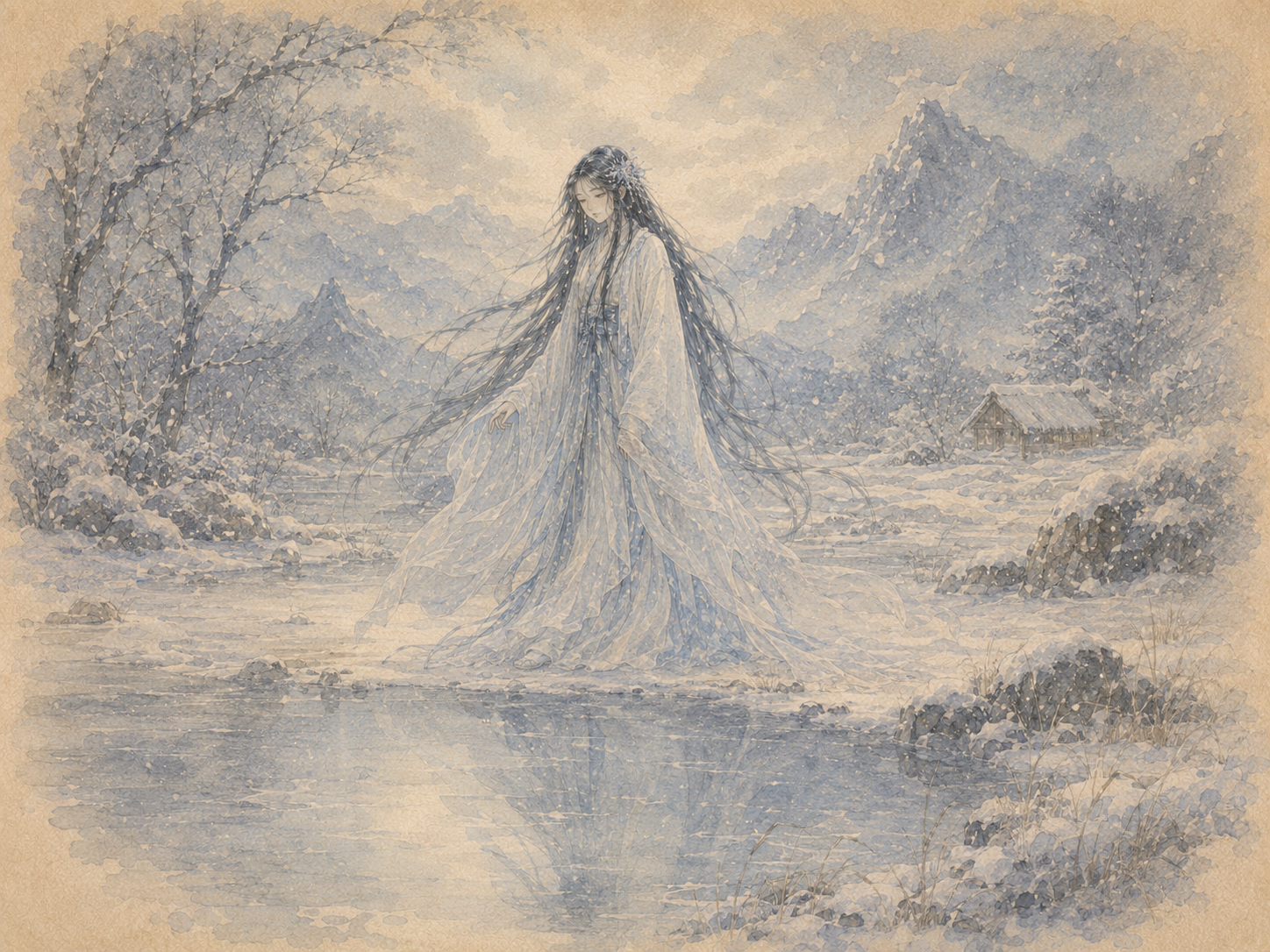
Jorogumo is a spider that gains a human face. In many stories she appears as a beautiful woman, plays music, draws men close, and reveals too late that the charm was also a web.
Edo tales and waterfalls
The figure appears in Edo-period works such as Tonoigusa and Taihei Hyakumonogatari, as well as local waterfall traditions. Running water, music, and invisible threads create a scene where desire and danger blur together.
What Jorogumo represents
Jorogumo is not merely a “female monster”. She dramatizes the fear of being led by a promise too beautiful to distrust. Her web is emotional and narrative: the more the victim believes he controls the encounter, the more trapped he already is.
Web, desire, and perception
Jorogumo is often remembered as a spider woman, but the most interesting point is not seduction alone. The web is an image of delayed perception: the victim understands the trap only after becoming attached to their own desire.
The figure works through enchantment, music, beauty, and threat. It shows that danger does not always arrive looking monstrous; sometimes it arrives as invitation, promise, or a presence that cannot be read at once.
Water, falls, and local legend
Many Jorogumo narratives are tied to rivers, waterfalls, and specific places. That makes her part of territorial folklore: fear is not abstract, but lives in a bend of water, on a bank, at a point where someone disappeared.
Preserving that local connection gives the article more than a list of powers. Jorogumo becomes a way of telling how communities turn dangerous landscape into narrated memory.
Japanese terms index
Jorogumo
A spider yokai who appears as a seductive and dangerous woman in Japanese tales.
Yokai
A broad term for strange beings and supernatural phenomena in Japanese imagination.
Tonoigusa
An Edo-period collection containing important stories about Jorogumo.
Taihei Hyakumonogatari
A collection of strange tales that helped circulate yokai images in the Edo period.
Joren no Taki
A waterfall in Izu associated with modern legends of the spider woman.
Tsuchigumo
An older warrior-like spider creature, different from the seductive image of Jorogumo.